Turn Off the Playlist: The Quiet Training Secret Japanese Skaters Use That Most Americans Have Never Tried
Pull up to pretty much any American skate spot on a Saturday afternoon and you'll hear it before you see it. Music bleeding out of a Bluetooth speaker someone zip-tied to their bag. A playlist that's equal parts hype fuel and social signal. It's part of the vibe, part of the ritual—and honestly, nobody questions it.
In Japan, the ritual looks a little different.
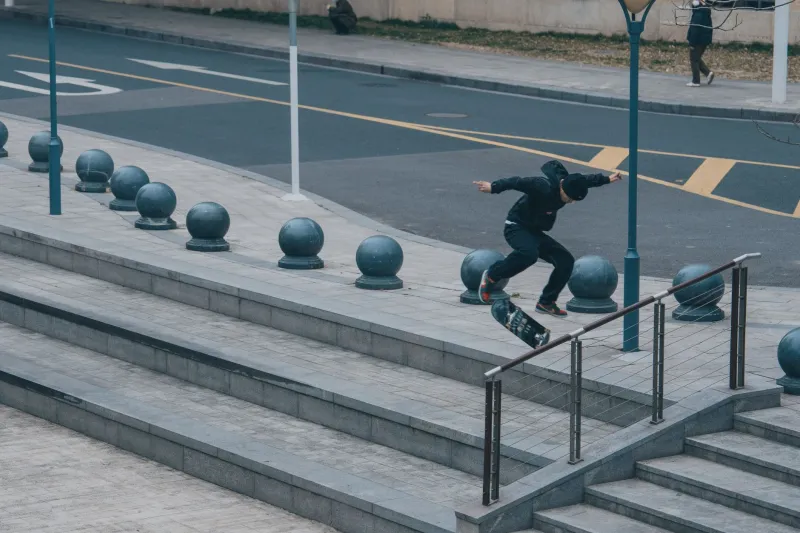
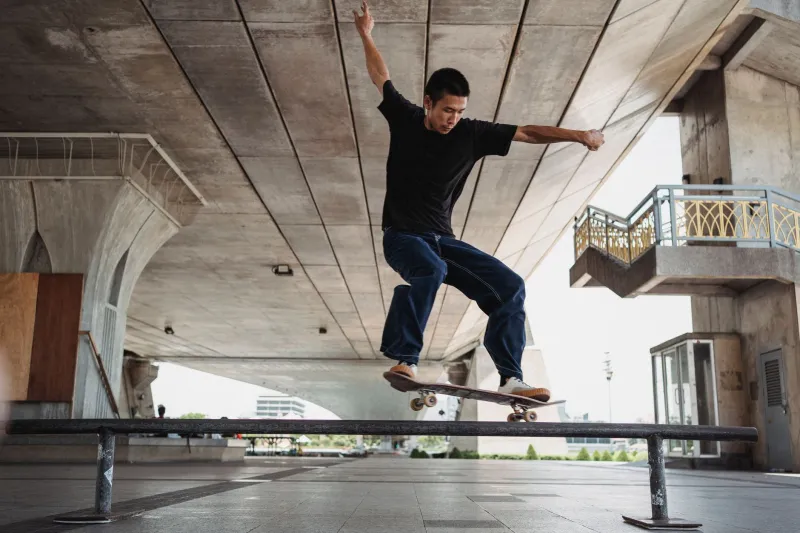
At a lot of skateparks and street spots across Tokyo, Osaka, and Nagoya, the default setting is quiet. Not library-quiet, but intentionally, almost philosophically quiet. Riders show up, drop in, and work. The soundtrack is the board itself—the pop of a kicktail, the grind of trucks on concrete, the soft thud of a landing that's just slightly off. And that's the whole point.
Listening as a Skill
The idea isn't some ancient Zen tradition transplanted onto a halfpipe. It's more practical than that. Japanese skaters who practice this way will tell you that sound is data. Every session generates a constant stream of audio feedback, and most riders in the US are simply not hearing it because they've buried it under a playlist.
Take wheel noise, for example. The subtle hum of urethane on concrete changes depending on speed, surface texture, and weight distribution. A clean landing sounds different from one where your weight is even slightly forward. The creak of a truck that needs tightening versus one that's dialed in—these are real, functional signals. When you're wearing earbuds or standing next to a speaker, you lose them.
Kenji Watanabe, a street skater based in Osaka who spent two months skating with a crew in Los Angeles, put it plainly when we talked to him: "In the US, the music is always on. I understand it—it feels good, it's energetic. But I kept noticing guys couldn't tell when their setup was off. They'd blame a missed trick on their feet, but I could hear it was the board. They just weren't tuned in."
What American Riders Are Starting to Notice
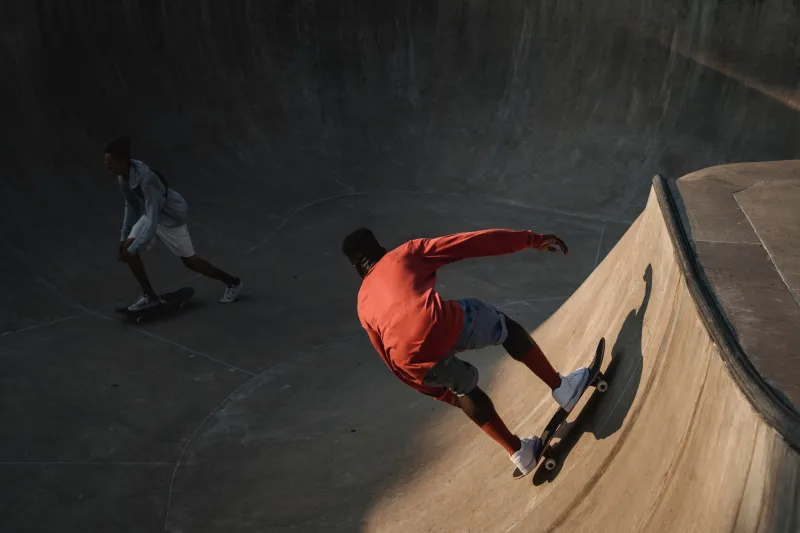
A handful of American skaters who've traveled to Japan or trained alongside Japanese riders are coming back with a different approach to their sessions. Marcus Delaney, a 24-year-old transition skater from Phoenix, started experimenting with silent sessions after skating at a park in Kyoto during a trip last year.
"I felt kind of naked at first," he admits. "Like, what do I do with my brain if it's not following a beat? But after maybe twenty minutes, I started hearing stuff I'd never noticed. My back foot was landing differently on my heelflips depending on whether I'd pumped enough speed. I could actually hear the difference. That was wild to me."
Delaney says he now does at least two silent sessions a week, treating them like a diagnostic tool rather than a vibe shift. "I still skate with music. I'm not trying to be a monk. But those quiet sessions are where I actually fix things."
The idea tracks with how sensory deprivation in one area tends to sharpen the others. When you're not processing a soundtrack, your brain has more bandwidth for proprioceptive feedback—the internal sense of where your body is in space—and for the external audio cues that tell you what's actually happening beneath your wheels.
Balance, Awareness, and the Obstacle You Didn't See
There's another dimension to this that goes beyond trick mechanics. Skating in silence makes you more aware of your environment in real time. At a busy street spot, that matters. You hear the approach of a bike, the scrape of another skater's board cutting into your line, the change in surface texture before you roll onto it.
At a concrete park in Fukuoka, this kind of environmental awareness is almost expected. Riders communicate through sound as much as eye contact—a certain kind of roll or a specific landing cue signals to others where you're headed next. It's an informal language that develops naturally when the music isn't competing with it.
For American skaters who've grown up in the speaker-on culture, this can feel like learning a new dialect. But riders who've made the adjustment say it changes how they read a spot entirely.
"You start skating smarter," says Delaney. "You're not just reacting to what you see. You're reacting to what you hear, what you feel through your feet. It's like adding a whole extra sense to your session."
The Meditative Angle (Without Getting Too Deep About It)
It'd be easy to over-spiritualize this. The quiet session isn't about achieving enlightenment or channeling some higher state of consciousness. But there is something to the mental clarity that comes from removing constant audio stimulation.
A lot of American skaters use music as a way to manage nerves—to psych themselves up before a big trick or to keep anxiety at bay during a rough session. That's valid. But it also means the music becomes a crutch, and some riders never develop the ability to stay focused and composed when the external hype isn't there. Competition runs. Unexpected sessions. Moments when the speaker battery dies and you're suddenly just you and the concrete.
Japanese skaters who practice in silence regularly tend to be comfortable in that space. They're not dependent on external stimulation to access their focus. That's a mental skill as much as a physical one.
How to Try It Without Hating It
If you want to experiment with this, you don't have to commit to a full silent-session lifestyle. Start with the first twenty minutes of your next practice. No music, no podcasts, no earbuds. Just skate and listen.
Pay attention to what your board sounds like when a trick goes right versus when it doesn't. Notice what your wheels tell you about your speed and surface. Listen for the moment your landing is centered versus slightly off-axis. It'll feel weird at first—probably a little boring, maybe a little exposed. Stick with it.
The playlist will still be there when you're done. But you might find that you want to leave it off a little longer next time.
That's the thing about this approach—it doesn't ask you to change your skating culture. It just asks you to hear it a little more clearly.