Terrain Literacy: What Japanese Skate Spots Are Actually Trying to Tell You
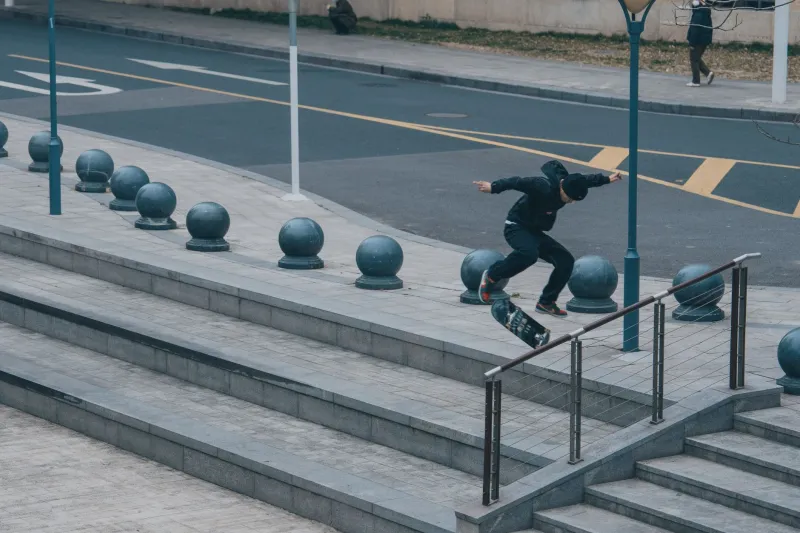
Most American skaters land in Japan expecting the spots to make sense immediately. Wide plazas, obvious ledges, the kind of concrete that practically begs you to skate it. What they actually find is something more layered — a landscape that communicates in a dialect you have to learn before it starts talking back.
Japanese street spots and skate parks aren't designed with the same visual loudness that American riders are used to. There's no neon sign pointing at the perfect curb. The best stuff tends to sit quietly in plain sight, waiting for someone who knows how to read it.
This is terrain literacy. And once you develop it, you don't just skate Japan better — you start seeing your home spots completely differently.
The First Rule: Stop Looking for the Obvious
American skate culture is built around spots that are recognizable at a glance. The Hollywood High 16. The Hubba Hideout. These are landmarks. You see them and you immediately understand what they're for.
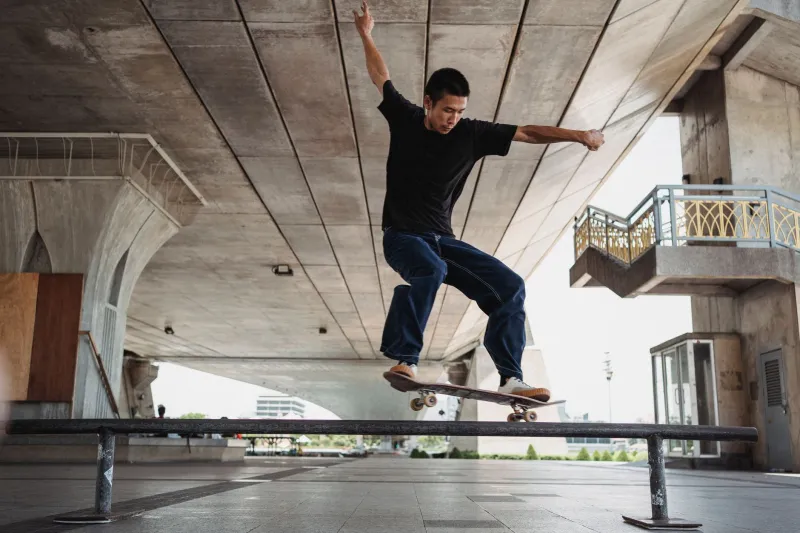
Japanese spots don't work that way. A lot of the best ones look, at first, like nothing at all. A low granite ledge running along the edge of a business district. A transition tucked behind a commuter station. A brick embankment that appears decorative until you notice the angle of its cap is exactly right.
The shift in mindset you need is simple but not easy: stop asking 'what is this for?' and start asking 'what does this allow?'
Functionality in Japanese urban design is often embedded rather than displayed. Ledges exist to define space, not to invite skating — but the same precision that makes them architecturally intentional makes them skateable in ways that sloppy American construction often isn't. The tolerances are tighter. The edges are cleaner. The wax holds differently because the stone is denser.
When you walk up to a Japanese spot and your first reaction is 'this doesn't look like much,' that's usually the moment to slow down and look harder.
Learning to Read Flow
Flow is the word skaters use for how a spot connects — how one element leads to another, how momentum carries through a space, how the terrain breathes.
In the US, flow is often engineered into skate parks deliberately. You can see it. The bowl leads to the bank leads to the rail. It's a sentence written in large print.
Japanese skate parks — and this is especially true of older municipal parks in cities like Kobe, Nagoya, and Sapporo — tend to write in smaller type. The flow is there, but it's implied rather than stated. You'll find a quarter pipe that seems isolated until you realize the slight slope of the surrounding concrete is meant to feed into it. A flat bar that looks randomly placed until you trace the natural line from the entry ramp and realize the positioning is exact.
Spend the first twenty minutes at any Japanese park just watching. Not warming up, not filming — watching. Pay attention to where other skaters naturally start their runs, where they exit, where they pause. The local riders have already decoded the spot. They're showing you the grammar in real time.
This is also true for street spots. In dense neighborhoods like Tokyo's Shimokitazawa or Osaka's Namba district, skaters have developed lines that thread through pedestrian traffic, use natural curb cuts as transitions, and treat the entire block as a single continuous obstacle. It looks improvised. It isn't.
The 'Broken' Spot That Isn't
Here's something that catches American riders off guard regularly: some of the most productive Japanese spots look damaged or incomplete at first glance.
A cracked concrete ledge. A rail with an unusual lean. A bank that seems too steep to be useful. In the States, these read as flaws — things that would be fixed or avoided. In Japan, they're often features that have been quietly incorporated into the local skating vocabulary over years.
The cracked ledge has a specific approach angle that makes the crack irrelevant. The leaning rail produces a grind feel that's actually more comfortable once you adjust your setup. The steep bank is the whole point — it's what makes the line out of it so technically demanding and so satisfying when it works.
Before you write off a spot as broken, ask yourself whether you're the one who's miscalibrated. Japanese riders have been skating these spots long enough to have figured out what they offer. If you see locals consistently using something that looks wrong to you, the problem is almost certainly your read, not the terrain.
Applying the Lens Back Home
Here's where this gets genuinely useful for everyday riding in the US.
Most American skaters approach their local spots with a fixed mental map. They know which ledge they skate, which bank they use, which gaps they hit. The spot has been categorized and filed. They stop seeing it.
Terrain literacy — the habit of reading a space rather than just recognizing it — breaks that pattern. When you've trained yourself to look for embedded flow, for subtle angles, for the spot inside the spot, you start finding new lines in places you've skated a hundred times.
That cracked parking structure downtown that everyone ignores? Walk it like a Japanese spot scout. Look at the level changes, the pillar spacing, the way the concrete transitions between sections. There's a decent chance there's a line in there that nobody's bothered to find because everyone stopped looking.
The same applies to DIY spot building. Japanese builders tend to work with terrain rather than against it — adding to what exists rather than replacing it. That philosophy produces spots that feel organic, that have personality, that reward repeated visits. It's a different approach than the 'pour concrete until it's perfect' mentality that dominates a lot of American DIY culture.
The Patience Factor
None of this works if you're in a hurry.
Reading terrain takes time. Japanese skate culture has a patience built into it that shows up in how riders approach spots, how they warm up, how they session. There's less of the American tendency to attack a spot immediately and move on. Japanese sessions often involve long periods of observation, discussion, and deliberate setup before anyone throws down anything serious.
That patience isn't passive. It's active looking. It's the process of building a complete picture of what a spot offers before committing to a line.
Bring that patience to your next session — at home, not just in Japan. Give yourself permission to stand and look before you skate. You'll be surprised what you've been rolling past without seeing.
Terrain is always communicating. The question is whether you've learned enough of the language to hear it.