Stop Buying Your Way Through Plateaus: The Japanese Skater's Financial Edge
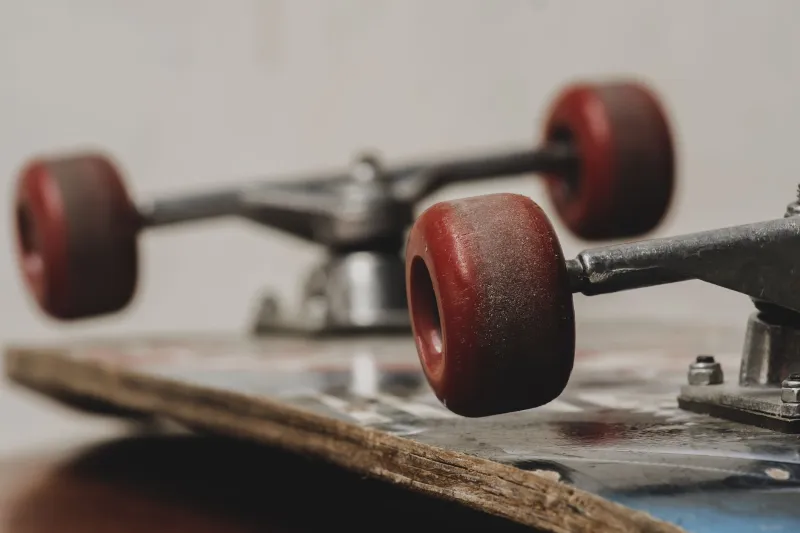
Let's run a quick tab. New deck every six to eight weeks — call it $60 a pop. Trucks when the axles get chewed up, which for an active street skater is maybe twice a year at $80 a set. Wheels when the flats get too bad, bearings when they start grinding, hardware that strips out, grip tape that peels. Shoes — this is where it really adds up — maybe a pair every five to six weeks if you're skating daily, somewhere between $70 and $120 depending on brand loyalty.
For an active American skater putting in regular sessions, a conservative annual equipment spend lands somewhere between $800 and $1,500. For a more serious rider who's chasing progression and replacing parts whenever something feels slightly off, that number can double.
Now ask a Japanese street skater how often they replace their deck. The answer will probably make you uncomfortable.
The Mastery-First Equipment Cycle
In Japan's skate culture, there's a deeply embedded idea that you haven't finished with a piece of equipment until you've genuinely exhausted what it can teach you. This isn't minimalism for its own sake. It's a practical philosophy rooted in the belief that the discomfort of worn gear is information — and that replacing equipment to escape that discomfort means bypassing the lesson.
Shin Takahashi, a street skater from Fukuoka who has been riding for over a decade, describes it this way: "When my board starts feeling different, that's when I learn the most. I have to adjust. My feet have to get smarter. If I just swap it out, I never develop that sensitivity."
That's a hard sell in a culture that has been trained to optimize everything immediately. American skate culture — shaped by brand marketing, YouTube gear reviews, and the constant churn of pro model releases — has built an implicit narrative that better gear equals faster progression. The progression-to-purchase pipeline is so normalized that most riders don't even notice they're in it.
But here's the problem with that pipeline: it externalizes the work. When something isn't clicking, the easiest explanation is that the equipment is the bottleneck. New wheels, new deck, new shoes — and for a few sessions, there's a placebo boost that feels like progress. Then the plateau returns, and the cycle starts again.
What the Gear Churn Actually Costs
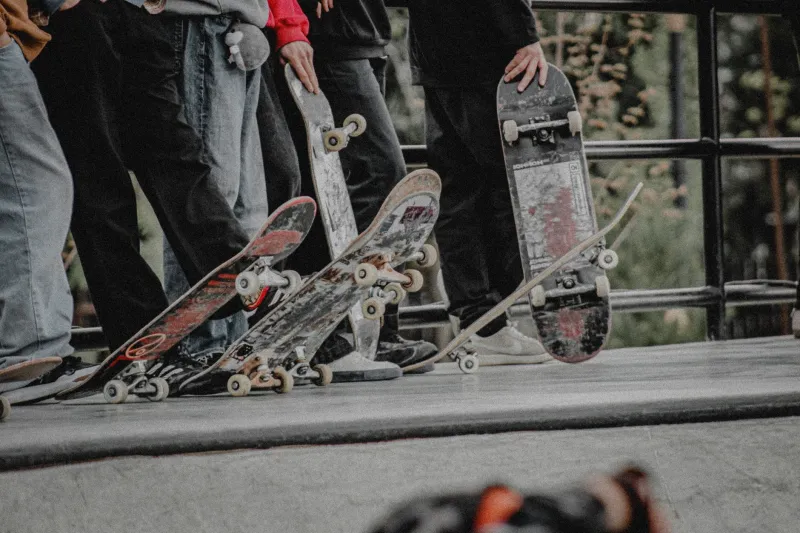
Beyond the financial hit, there's a skill cost that doesn't show up on any receipt. Riding the same setup through its entire lifespan forces adaptation. Grip tape that's losing texture teaches your feet to read the board differently. A deck that's slightly waterlogged from a rainy session has different pop characteristics. Wheels that have worn down a few millimeters ride closer to the ground and require more precise foot placement.
Japanese riders who stay with their gear longer develop what you might call tactile fluency — a fine-grained physical understanding of their equipment that riders who constantly swap out never quite build. It's the difference between knowing your board and using your board.
There's also an environmental calculus here that the American skate industry rarely wants to discuss. Maple decks, urethane wheels, aluminum trucks — skateboard manufacturing has a real material footprint. The mastery-before-purchase approach that Japanese skaters default to is, incidentally, one of the more sustainable consumption patterns in action sports. Not because Japanese riders are making a political statement, but because the cultural value of not wasting something functional runs deep.
The Subscription Service Problem
One American skater, a 22-year-old from Atlanta who asked to stay anonymous, described his own spending habits with unusual honesty: "I realized I was basically subscribing to progression. Like, I wasn't actually getting better — I was just buying the feeling of starting fresh. New board smell, new wheel feel. It reset my frustration for about a week."
That reset-through-purchase pattern is genuinely addictive, and the skate industry has no incentive to interrupt it. But riders who've spent time around Japanese skate culture tend to come back with a different perspective on what they were actually spending money on.
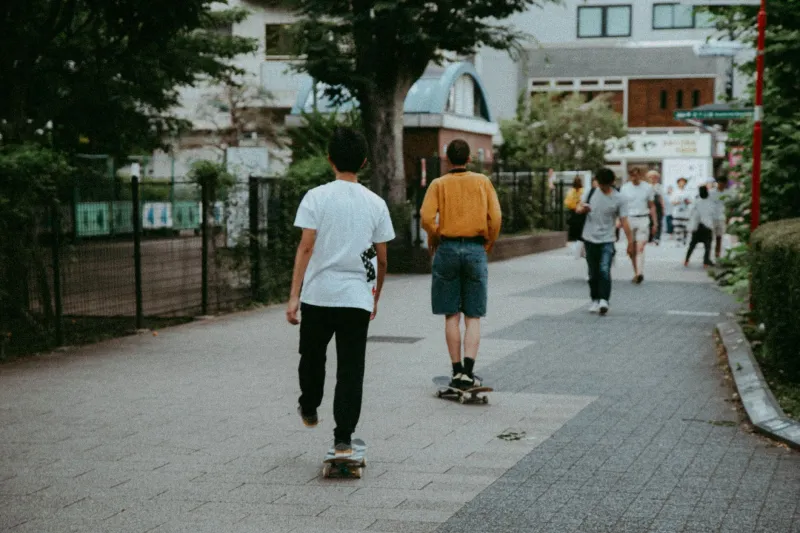
Keisuke Yamamoto, who coaches young skaters in Tokyo and has worked with American riders visiting Japan on exchange programs, says the culture shock usually hits hardest around gear: "American kids are surprised that our best riders are on boards that look pretty beat up by American standards. But those riders know every inch of their setup. They're not fighting their gear — they're working with it."
A Practical Recalibration
None of this means American skaters should ride broken equipment into the ground. Safety is real — a delaminating deck or cracked truck is a hazard, not a teaching tool. The point isn't self-deprivation. It's intentionality.
The Japanese approach to gear replacement is essentially this: replace when the equipment is genuinely limiting your safety or your ability to execute, not when it's merely uncomfortable or aesthetically worn. That standard is much higher than the American default, and closing the gap even partially has measurable financial and skill benefits.
Some US riders are already running their own experiments. Extending deck life by two or three weeks. Riding wheels down to smaller diameters before swapping. Keeping the same trucks through a full year of sessions instead of upgrading when the grinds start looking rough.
The results, almost universally, are the same: initial frustration, followed by adaptation, followed by a level of board feel that a fresh setup purchase never delivered.
You can't buy your way to skateboarding intuition. Japanese riders figured that out a long time ago. The price tag on that lesson, it turns out, is zero.