Built to Last: The Hidden Architecture of Japanese Skate Crews
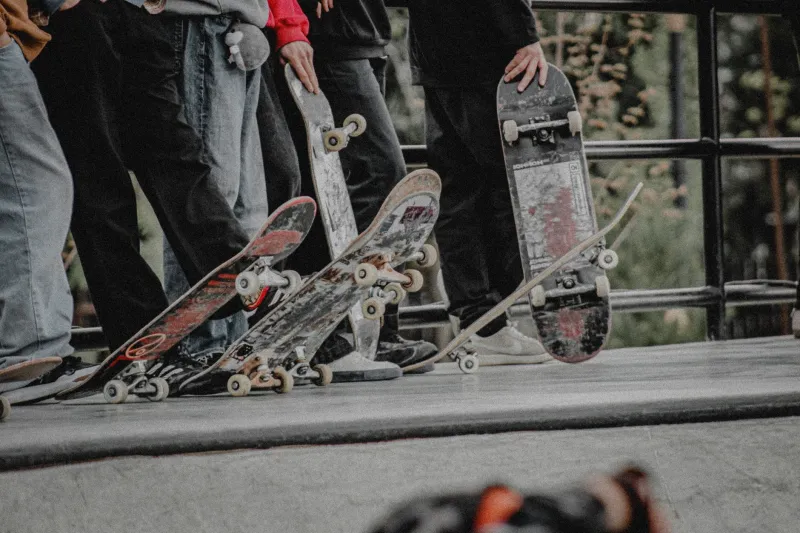
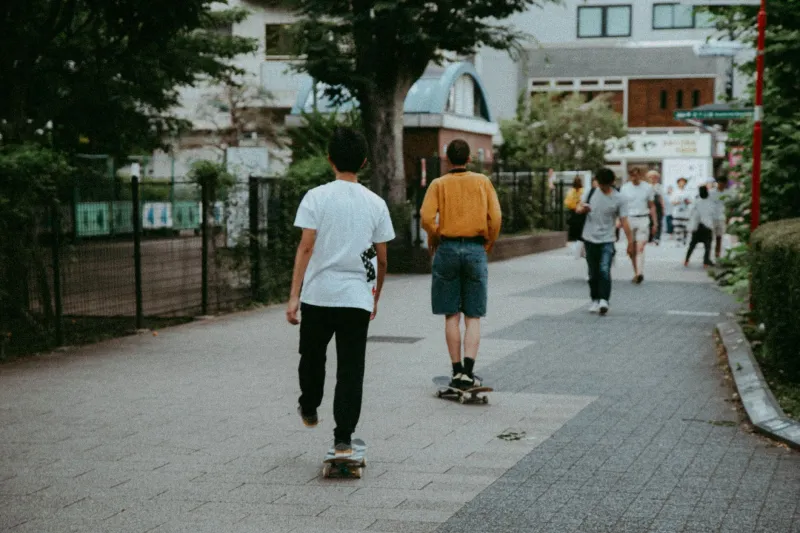
Somewhere in Koenji, a neighborhood in western Tokyo, there's a crew of skaters who have been riding together for over fifteen years. They don't have matching hoodies. They don't have a brand deal. Three of them have day jobs that have nothing to do with skating. None of them have more than a few thousand Instagram followers. And yet, every weekend, they show up to the same spots, in the same order, the way they always have. Nobody had to organize it. Nobody sent a group text. It just happens.
Now think about the last American skate crew you watched fragment. Maybe it was a local squad that dissolved when one member got a sponsor and the social dynamic shifted. Maybe it was a collective that imploded over who got credit for a clip. Maybe it was just four guys who stopped hitting each other up because nobody wanted to be the one who cared more.
These two scenarios aren't random. They're the product of different structural logics — different assumptions about what a crew is, what it's for, and what holds it together when skating gets hard or life gets complicated.
Territory Over Clout
One of the foundational differences between Japanese skate collectives and American crews is their relationship to place versus visibility. American crews tend to organize around output — shared footage, shared aesthetic, shared social media presence. The crew exists, in a practical sense, to produce content and accumulate audience. That's not a cynical observation; it's just the incentive structure that American skate culture has built around itself.
Japanese crews organize around territory in a much older sense. Not ownership — nobody owns a spot — but stewardship. A crew that has been skating the same set of locations for years develops a relationship with those places that's almost custodial. They know the spots better than anyone. They manage their use implicitly, keeping sessions low-profile, maintaining the concrete, navigating relationships with property owners and local residents. The spot becomes part of the crew's identity in a way that a logo or a YouTube channel never quite does.
This territorial rootedness creates a different kind of glue. When the thing holding your crew together is a shared history with specific physical places, you can't really leave the crew without leaving those places too. That's a much stronger bond than a shared aesthetic or a collab video.
Implicit Loyalty vs. Transactional Membership
American skate crews often function on what you could call transactional membership: you're in the crew as long as you're contributing something — footage, energy, connections, clout. When the transaction stops making sense for one party, membership ends. This isn't anyone's fault. It mirrors the broader American cultural logic of relationships as value exchanges.
Japanese skate collectives operate on a different model — closer to what sociologists might call implicit loyalty, where membership is assumed and sustained rather than negotiated. You don't join a Japanese crew through an audition process. You join by showing up consistently over a long period of time until you're simply part of the fabric. And you don't leave by announcing your departure. You fade, or you don't. The collective doesn't have formal edges.
Hiroshi Kato, who has skated with the same core group in Nagoya for eleven years, describes it with characteristic understatement: "We never talked about being a crew. We were just always there. After a while, that becomes the same thing."
That informal accumulation of shared time is harder to disrupt than any formal arrangement. There's no contract to void, no membership to revoke, no drama to trigger a breakup. The crew exists because the people in it keep choosing to exist together, quietly, without making a production of it.
What Sponsorship Pressure Does to American Crews
The sponsorship pipeline is one of the most reliable fracture points in American skate collectives. When one member of a crew starts getting industry attention, the social equilibrium shifts. The sponsored rider's priorities change. Their schedule changes. Their relationship with filming and content changes. And the rest of the crew has to figure out how to relate to someone who is now, in some sense, a professional where they are not.
This isn't a solvable problem within the American model, because the model itself creates the pressure. When individual visibility is the primary currency of skate culture, any crew member who accumulates more of it than the others will eventually strain the group's cohesion.
Japanese crews aren't immune to this, but the cultural context buffers it. Individual recognition is less central to the Japanese skate identity. The crew's reputation matters more than any individual member's profile. Riders who do get industry attention tend to bring it back to the collective rather than leveraging it for personal separation — partly because the collective's identity is part of their own, and partly because the Japanese cultural value of not standing too far above your group runs deep.
Building Something That Lasts: Practical Notes for American Riders
If you're trying to build a crew that doesn't fall apart in two years, the Japanese model offers some concrete lessons.
First, root the crew in place rather than output. Pick spots that everyone loves and commit to them over time. Build history with specific concrete rather than chasing the next Instagram location. The shared geography becomes shared memory, and shared memory is harder to walk away from than shared content.
Second, let membership be implicit. Stop defining who's in and who's out. Let the crew be whoever keeps showing up. That open-ended definition removes the transactional pressure and lets relationships develop at their own pace.
Third, protect the crew's internal culture from external incentives. When sponsorship opportunities, media attention, or social media competition start reshaping how the group interacts, name that dynamic explicitly and decide together how to handle it. Most American crews let that pressure operate silently until it's already done the damage.
The Koenji crew doesn't have a name. They don't have a brand. They don't have a five-year plan. What they have is fifteen years of Saturday mornings on the same concrete, in the same order, the way they always have.
That's the architecture. It's simpler than it looks, and harder to build than anything you can buy.