Say Less, Land More: The Japanese Skate Crew Communication Code American Riders Are Finally Catching On To
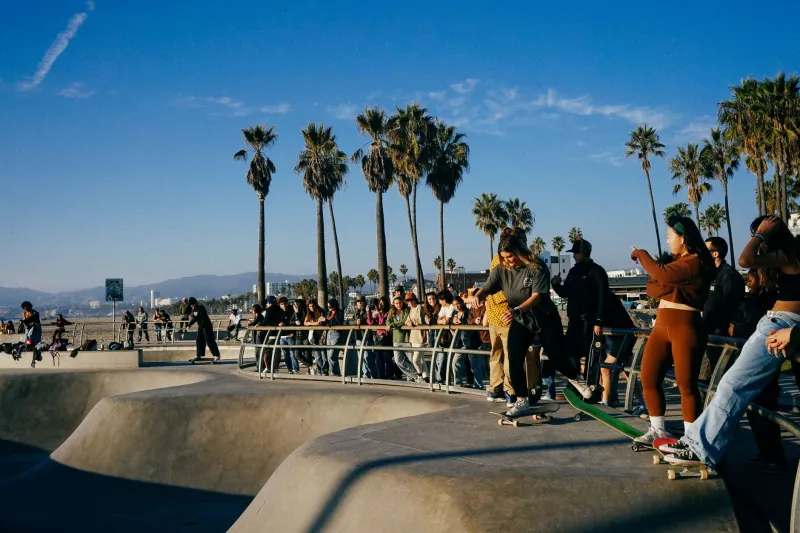
Pull up to any skatepark in LA, Chicago, or New York and you'll hear it — a running commentary that never really stops. Someone's mid-run and there's already a guy on the sideline narrating the physics. "You're flicking too early." "Your back foot's off the pocket." "Dude, just pop harder." American skate culture has a talking problem. Not in a bad way, exactly — but the volume of verbal instruction happening at any given session can sometimes drown out the one thing that actually teaches you anything: watching someone ride.
Japanese skate crews operate on a different frequency entirely. And the more American riders spend time around them — whether in Tokyo, through online footage, or at international contests — the more they're starting to wonder if the key to progression has been silence all along.
The Culture of Observation
In Japan, the concept of minarai — learning by watching — runs deep across disciplines, from martial arts dojos to traditional craft apprenticeships. You don't ask how. You observe until you understand. Then you try. The teacher doesn't explain every micro-detail; the student earns comprehension through close attention.
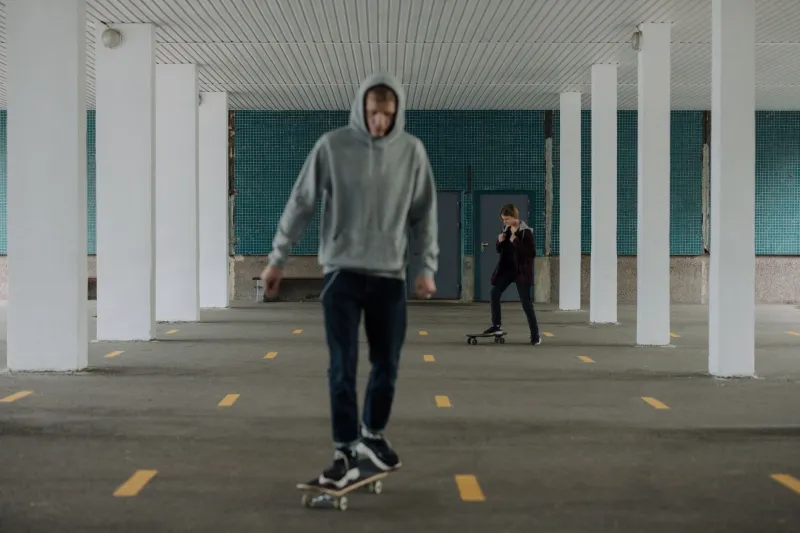
This same logic shows up in how Japanese skate crews function. When a rider is working on a trick, the crew isn't crowding in with verbal fixes. They're watching. Quietly. There might be a nod when something clicks, or a single short phrase when it doesn't — but the air isn't thick with instruction. The session breathes.
American skaters who've visited Tokyo and sessioned with local crews consistently mention this as the first thing that catches them off guard. It can initially read as coldness or disinterest. It isn't. It's respect — for the rider's process, and for the idea that some things need to be felt before they can be said.
What Over-Explaining Actually Does to Your Body
Here's the thing about verbal instruction: it's processed cognitively, not physically. When someone tells you to "pop earlier and keep your shoulders square," your brain receives that as data. But skateboarding isn't executed from your brain. It comes from your nervous system, your muscle memory, the accumulated physical feedback of a thousand repetitions.
Loading a rider with verbal cues right before an attempt can actually interfere with the body's ability to self-correct. Coaches in other athletic disciplines have a term for this: "paralysis by analysis." You've thought about the trick so hard that your body can't just do the trick.
Japanese skate culture, whether by design or tradition, sidesteps this trap. When you're not being handed a checklist of corrections, you're forced to develop your own internal read on what's going wrong. You watch the other guy land it. You feel where your version diverges. You adjust from the inside out.
That's a fundamentally different — and arguably more durable — kind of learning.
The Nod Economy
Spend enough time studying Japanese session footage and you start noticing a whole nonverbal grammar at work. There's the slight chin-raise that means try it again. The exhale-and-step-back that signals give yourself a minute. The way a crew member will simply skate the same line after you've bailed — not to show you up, but to offer a visual reference without words.
It's efficient in a way that verbal communication often isn't. No misinterpretation, no ego in the delivery, no rider feeling talked down to. The information arrives through demonstration and presence, which is exactly how the body best receives it.
Some American riders are actively building this into their own sessions now. Skaters in crews across the Pacific Northwest and the Northeast have started experimenting with "silent sessions" — agreed-upon time blocks where no verbal coaching happens. The results, by most accounts, are weird at first and then revelatory. People start watching each other more carefully. The session dynamic shifts. Riders report feeling less self-conscious about their attempts.
What This Doesn't Mean
None of this is an argument that talking is bad or that American skate culture's openness is a flaw. The accessibility of American sessions — the way you can walk up to a spot and immediately be in conversation, get tips, feel welcomed — is genuinely valuable. It's part of what makes US skate culture one of the most inclusive in the world.
But there's a difference between community conversation and constant coaching. Between hyping a homie and micromanaging their technique out loud. Japanese crews tend to reserve words for when they actually matter, which means when something is said, it lands with weight.
There's also something worth noting about ego. A lot of verbal instruction in American sessions is at least partly performative — it signals that the speaker knows the mechanics, that they've thought about this, that they're invested. Japanese session culture doesn't reward that performance. Nobody's getting points for the most technical breakdown. The only thing that counts is what happens on the pavement.
Bringing It Home
You don't need to book a flight to Tokyo to test this out. The next time you're at your local spot, try watching a full run before you say anything. Really watch — not just waiting for your turn to talk, but absorbing the body language, the setup, the foot position. When your homie bails, resist the reflex to immediately diagnose it out loud. Let them take another try. See what they self-correct.
You might be surprised how much your crew is capable of figuring out on their own — and how much cleaner your own riding gets when you're not narrating it in real time.
Say less. Watch more. The concrete will tell you everything you need to know.