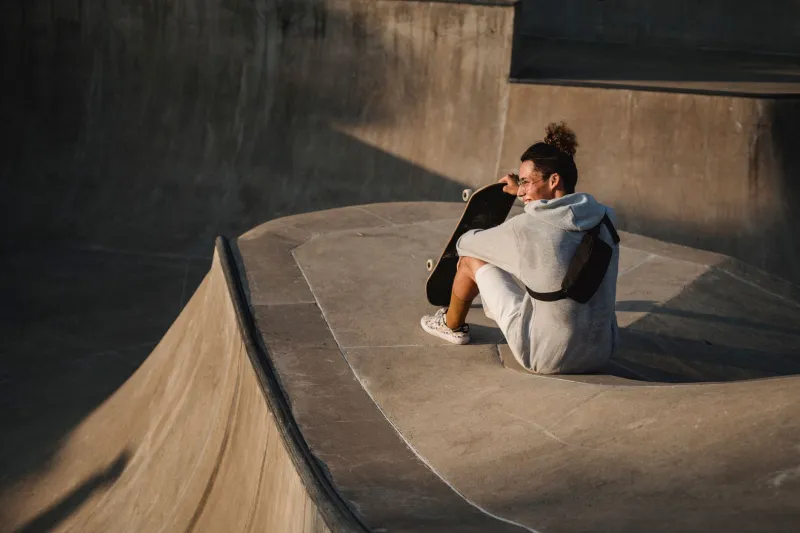
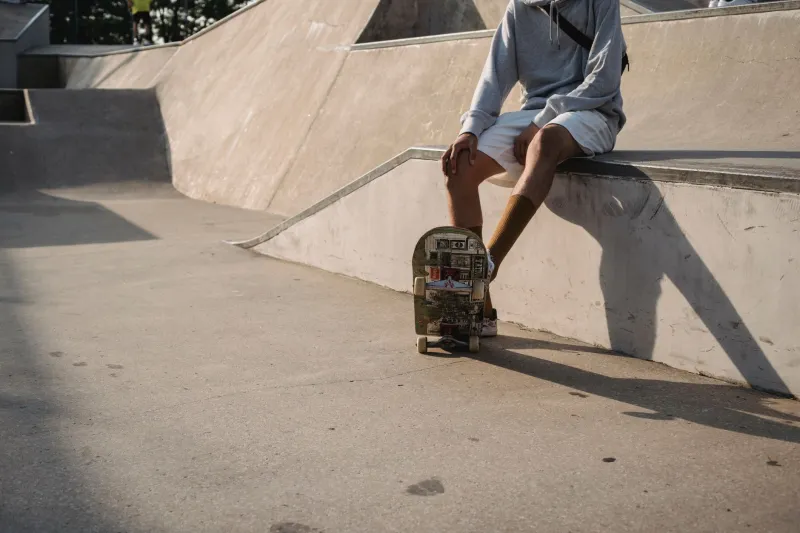
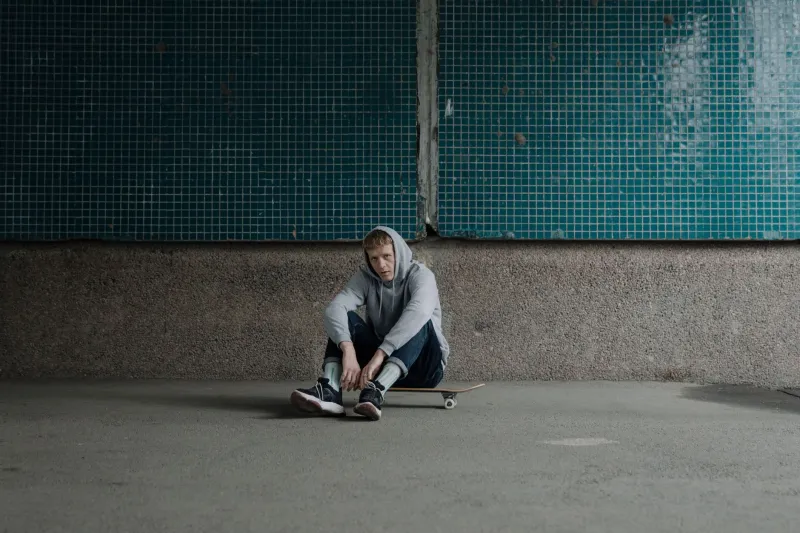
Concrete Literacy: The Japanese Skater's Secret to Seeing Spots Nobody Else Can Find
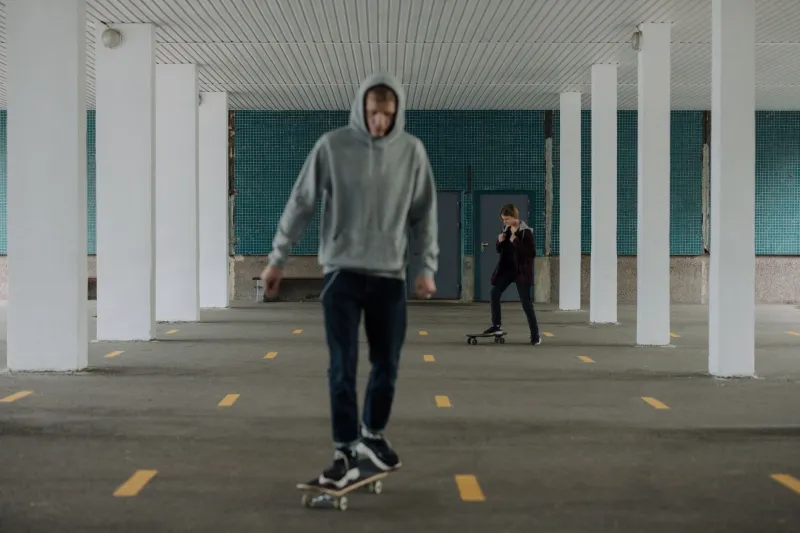
Most American skaters find a spot the same way. A friend texts a photo, someone posts a clip on Instagram, and suddenly twenty people are rolling up to the same ledge on a Saturday afternoon. It works. But it also means you're always skating someone else's discovery.
In Japan, the culture around finding spots operates on a different frequency. It's quieter, more deliberate, and rooted in a kind of sensory training that doesn't really have a direct English translation. The closest you might get is me wo koyasu—a phrase that loosely means 'to train the eye' or 'to cultivate vision.' It's used in art, in craft, in architecture. And in the streets of Osaka, Tokyo, and Nagoya, it's the invisible skill that separates riders who always seem to find something fresh from those who are perpetually skating the same three spots.
The Walk Before the Skate
Here's something that might sound strange to American ears: a lot of Japanese skaters deliberately leave their boards at home when they're scouting. Not sometimes. Regularly.
The logic is clean. When you're pushing, your brain is in skate mode. You're thinking about lines, momentum, what's coming next. You're optimizing for movement. But when you're on foot, your brain slows down and starts processing the environment at a different resolution. You notice the angle of a curb cut. You feel the texture of a plaza surface through your shoes. You clock the way afternoon light hits a transition and exposes a seam in the concrete that would eat a front truck.
This pedestrian scouting habit is common enough in Japanese skate culture that it barely gets mentioned—it's just assumed. For American riders raised on the idea that more time on the board equals more progress, the whole concept can feel counterintuitive. But the results speak for themselves. Riders who walk their cities regularly find spots that have existed for decades, hiding in plain sight.
Micro-Terrain and the Art of Scale Shifting
One of the most transferable skills Japanese skaters develop is what you might call scale shifting—the ability to mentally zoom in and out on a piece of urban terrain until the rideable geometry reveals itself.
At street level, a downtown block in any American city looks like a mess of obstacles, security guards, and foot traffic. Zoom out mentally, and you're looking at a rough map of elevation changes, material transitions, and open lines. Zoom back in, and suddenly that weird concrete lip on the edge of a loading dock becomes a manny pad with a gap out. The planter box you've pushed past a hundred times has a back edge that grinds clean.
Japanese urban environments are often denser and more vertically complex than American ones, which may be part of why this skill gets developed more naturally there. When you're skating in a city where the terrain is compressed and layered, you're forced to look harder. You can't just roll until you find a perfect, obvious spot. You have to earn the read.
Bringing that same scrutiny to American streets—which often have more space but less obvious 'skate architecture'—can completely reframe what you thought was a dead zone. Suburban strip malls. Hospital plazas. Community college campuses. These places are full of geometry that most riders dismiss on a first pass.
Wabi and the Beauty of the Imperfect Spot
There's a Japanese aesthetic concept called wabi that values the beauty found in imperfection, incompleteness, and the passage of time. It's the philosophy behind appreciating a cracked tea bowl or a moss-covered stone. And it maps surprisingly well onto how Japanese skaters approach rough, imperfect spots.
American skate culture has a tendency to chase the pristine—smooth marble, freshly poured concrete, purpose-built skateparks with perfect transitions. That preference isn't wrong, but it narrows the field of what's considered worth skating.
Japanese spot culture is more comfortable with roughness. A slightly uneven ledge that requires a specific approach angle. A transition that's close but not quite perfect, forcing you to adjust your weight distribution mid-trick. These imperfections aren't dealbreakers—they're part of what makes the spot interesting. They demand more from you as a skater, and landing something on a janky spot often feels better than landing it clean on a perfect one.
Shifting your mindset in this direction opens up a massive amount of terrain that you've probably already rolled past. The crumbly brick ledge behind your local coffee shop. The rough asphalt bank behind a grocery store. The slightly off-camber flatground in a parking structure. None of it is perfect. All of it is skateable.
The Notebook Habit
Another practice worth stealing: Japanese skaters keep records. Not in any formal or obsessive way, but there's a culture of noting spots—sometimes in actual notebooks, sometimes in photo archives, sometimes just in mental maps that get updated every time they move through a neighborhood.
This habit does a few things. It forces you to pay attention during non-session time. It builds a personal spot library that's entirely your own, not curated by an algorithm. And over time, it develops a kind of spatial memory that makes you better at reading new environments quickly, because you've trained yourself to look for the same geometric patterns across different locations.
If you want to start somewhere simple: next time you're driving or walking somewhere in your city, commit to noticing one potentially skateable feature per block. Don't judge it. Don't decide if it's worth skating. Just see it. Name it mentally. Ledge. Bank. Gap. Transition. Do that for a few weeks and watch how your eyes start to move differently through space.
Bringing It Back to American Asphalt
American cities are full of untapped terrain. That's not a hot take—it's just a fact that becomes obvious once you start looking through a different lens. The infrastructure of everyday American life is built from the same raw materials as any skate spot: concrete, steel, asphalt, brick. The geometry is there. The question is whether you've trained yourself to see it.
The Japanese approach to spot hunting isn't mystical. It's disciplined observation practiced over time, shaped by an aesthetic philosophy that values attention and patience over speed and convenience. It's the willingness to walk a neighborhood without your board. To look at a busted curb and ask what it could be instead of what it is. To find something real in the imperfect and the overlooked.
Your city has spots you've never skated. Some of them are within a mile of where you're sitting right now. You just haven't learned to see them yet.
Start walking.