The Long Game: What Japanese Trick Progression Teaches American Skaters About Time
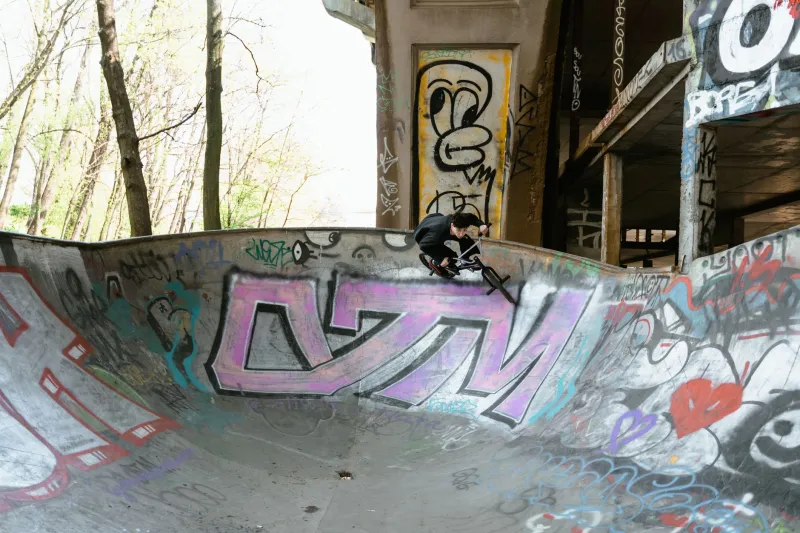
There's a specific kind of frustration that American skaters and BMX riders know intimately. You've been working a trick for weeks — maybe months — and it still isn't there. The progress feels invisible. Your friends are landing new stuff. Your feed is full of people your age doing things you haven't figured out yet. And somewhere in the back of your head, a quiet but persistent voice starts asking whether this trick is even worth the time.
For a lot of US riders, that's when the trick gets quietly abandoned. Not officially. You don't announce you're giving up. You just stop trying it as often. You redirect your energy toward something that feels closer to landing. Something that'll give you a clip sooner.
In Japan, that voice sounds different. Or maybe it's just easier to ignore.
A Different Relationship With the Timeline
Spend time around Japanese skate or BMX culture and one thing becomes clear quickly: the timeline for trick progression is dramatically longer, and nobody seems particularly stressed about it. Riders will work a single trick — a specific line, a technical variation on something fundamental — for months or years without the kind of existential anxiety that tends to accompany that same timeline in the US.
This isn't because Japanese riders are more talented or more patient by nature. It's because the cultural framework around progress and time is genuinely different.
In American action sports culture, the dominant narrative is acceleration. Land tricks faster, film more, post more, grow faster. Coaching culture, social media, and even the structure of amateur competition all push toward speed of progression as the primary metric of a rider's worth. The question isn't just "can you do this?" but "how long did it take you?"
Japanese riders — particularly those coming from a cultural context that values shokunin (craftsperson) mentality — tend to orient around mastery rather than speed. The question isn't how fast you got there. It's whether you actually own it when you do.
"I spent about three years working on a specific nose manual variation," says Sapporo-based BMX street rider Kenji Moriwaki, who now coaches young riders in Hokkaido. "Not every day, but consistently. People around me weren't confused by that. Nobody asked me why I was still working on it. It was just understood that when I landed it, it would be real. It would be mine."
Three years. For a single variation. In American BMX culture, that's almost unthinkable as a public commitment.
Why Americans Abandon Tricks (And What It Costs)
The economics of American trick progression are worth examining honestly. Content culture has accelerated the already short feedback loops of action sports to an almost absurd degree. A trick that doesn't produce a clip quickly is a trick that doesn't produce content. No content means no growth. No growth means falling behind in a game that never pauses.
This creates a very specific kind of pressure that pushes riders toward a portfolio of medium-difficulty tricks rather than deep investment in genuinely hard ones. It's rational behavior given the incentive structure. But it has consequences for the quality and character of what gets developed.
"I see so many American kids who have a wide, shallow trick library," says Phoenix-based BMX coach and former amateur competitor Daria Solano, who spent a year training in Japan. "They can do a lot of things at a surface level. But when you watch Japanese riders who've committed to specific techniques for years, there's a completeness to what they do that's different. The trick isn't just landed — it's owned. You can feel the difference."
That difference is hard to quantify, but experienced riders and coaches recognize it immediately. There's a quality of control, of intention, that comes from genuinely long-term development of a movement pattern that simply can't be shortcut.
The Mastery Mindset in Practice
Adopting a longer view on trick progression doesn't require rejecting the energy and ambition that defines American riding culture. It requires reframing what progress actually looks like.
One practical shift: separate your trick work into two categories. Maintain a set of tricks you're developing for the long term — things that are genuinely hard, that require fundamental skill development, that won't come quickly. Keep working those in parallel with shorter-term goals. Don't abandon them when the timeline extends. Treat them as investments, not experiments.
Another shift: track quality, not just completion. Japanese riders often describe a distinction between "landing" a trick and "having" a trick. Landing means you can do it on a good day. Having means it's reliable, intentional, and repeatable under pressure. These are different thresholds, and most American riders celebrate the first one and never reach the second.
"I started asking myself a different question," says Austin BMX rider and longtime Tokura Freestyle reader Jordan Esteves, who restructured his training approach after connecting with Japanese riders through an online community. "Instead of 'did I land it?' I started asking 'do I have it?' That one question changed how long I'm willing to stay with something before I feel done with it."
What Three Years Actually Buys You
Here's the thing about Kenji Moriwaki's three-year nose manual variation: when he finally had it, he had it completely. The body mechanics were so deeply embedded that the trick became a creative tool rather than a challenge. He could modify it, combine it, build on it. Because he'd spent three years developing the foundation, everything built on top of that foundation was more stable.
That's the return on the long investment that American riders rarely get to experience, because most of them exit the process too early.
Speed and aggression are real assets in action sports. The American impulse to push hard and move fast has produced some of the most creative and progressive riding in the world. But the Japanese understanding of time — that mastery is a long project and that's not a problem, it's the whole point — offers something that pure acceleration can't: depth.
The trick that took three years isn't a failure story. It's a different kind of success. One that lasts.