Presence Over Permission: What Japanese Street Skaters Know About Owning a Spot Without Owning Anything
Every serious street skater knows the politics. A good spot is currency. You don't post it publicly until you've gotten what you need from it. You watch who else is skating it. If the wrong crew rolls up — too loud, too reckless, too likely to get the whole thing shut down — there's tension. In American street culture, spot ownership has always had a territorial edge to it. You found it, you work it, you defend it.
In Japan, it plays out differently. And the difference isn't just cultural texture — it's a functional strategy that keeps spots alive longer, keeps security guards from calling it in, and builds the kind of community around a location that makes it almost impossible to kill.
The Invisible Claim
There's a ledge spot in Osaka that's been skated consistently for over fifteen years. No crew has ever formally "claimed" it. There's no graffiti marking territory, no confrontation with newcomers, no aggressive gatekeeping. And yet, somehow, it's never been barricaded. The security guard who works the adjacent building knows the regulars by face. The nearby convenience store staff has watched generations of skaters cycle through.
What happened there wasn't accidental. The crew that first developed the spot understood something that a lot of American riders are still learning: the most durable form of access is relationship, not exclusion.
They kept the spot clean. They were respectful to anyone who happened to be nearby. When new riders showed up, they were welcomed in, not confronted — because a confrontational scene draws attention, and attention draws security. The spot's longevity came directly from its low social friction.
Ma and the Art of Fitting In
There's a Japanese spatial concept called ma — the idea of meaningful negative space, of what exists between things. In architecture and design, it describes the deliberate empty space that gives a room its character. In street skating, something similar applies to how Japanese riders relate to urban space.
Rather than imposing themselves on a location, experienced Japanese street skaters learn to read and respond to the existing energy of a place. Is there foot traffic? You adjust your lines to work around it, not through it. Is there a business nearby that might be disturbed by noise? You session during hours when it's closed, or you keep the volume down. You don't conquer a spot — you coexist with it.
This isn't weakness. It's strategy. A spot that fits naturally into its surrounding environment is a spot that survives.
What American Spot Culture Gets Right — and Where It Falls Short
American street skating has produced some of the most creative and aggressive spot discovery in the world. The willingness to skate anywhere, to push back against no-skate ordinances, to film at spots that are technically off-limits — that fearlessness is genuinely part of what makes the culture great. The DIY ethos, the "skate everything" mentality, the willingness to fight for public space through sheer persistent presence — these are real values worth keeping.
But the territorial side of American spot culture has a cost. Crews that guard spots aggressively, that treat newcomers as threats, that let ego drive their relationship with a location — they often end up accelerating the very thing they're trying to prevent. A confrontation in front of a spot creates a scene. A scene creates a complaint. A complaint creates a barricade.
The spots that last in American cities tend to be the ones where someone in the crew understood the Japanese principle intuitively, even if they never named it that way: take care of the space, build goodwill with the surroundings, and let the quality of your presence do the work of protection.
Crews Doing It Differently
In cities like Denver, Philadelphia, and Atlanta, some crews have started explicitly modeling their spot approach on this relationship-based framework. They show up consistently, keep their spaces clean, and actively build rapport with anyone who has a stake in the surrounding area.
A crew in Denver's Five Points neighborhood has been maintaining a DIY spot for four years by treating it like a community resource rather than a private claim. They've done cleanup days, invited neighborhood kids to learn basic tricks, and made sure the surrounding property owners know who they are and what they're doing. The spot has never been cleared. Nobody owns it. Everyone benefits from it.
"We stopped thinking about it as our spot," one of the crew's founding members explained in a local skate zine last year. "We started thinking about it as a spot we're responsible for. That's a completely different energy."
That distinction — stewardship versus ownership — is exactly the shift that Japanese street culture has been practicing for decades.
The BMX Parallel
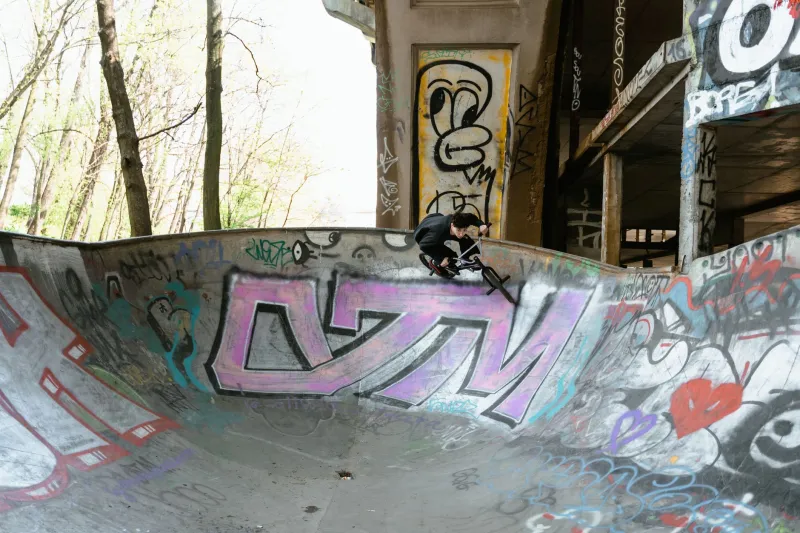
It's worth noting that this approach isn't exclusive to skateboarding. BMX street riders in Japan operate under similar unwritten codes. Spots that have been ridden for years by the same loose community of riders tend to stay accessible precisely because those riders have built quiet, respectful relationships with the surrounding urban fabric. They don't announce themselves. They don't escalate. They ride well, clean up, and leave.
American BMX street culture, which has its own rich history of spot discovery and community building, is increasingly seeing riders adopt similar frameworks — particularly in cities where spot scarcity has made the cost of losing a location feel very real.
The Long Game
The deepest lesson from Japanese street culture's approach to spot politics isn't really about tactics. It's about time horizon. If you're thinking about a spot in terms of what you can get from it right now — the clips, the session, the claim — you'll treat it one way. If you're thinking about it as a place you want to be skating in five years, you'll treat it completely differently.
Japanese street culture tends toward the long game by default. Spots are relationships, not resources. The crew that's been skating the same Osaka ledge for fifteen years didn't get lucky. They made deliberate choices, over and over again, that added up to something lasting.
You don't need to own a spot to keep it alive. You just need to be worth having around.