Off the Map: The Hidden Japanese BMX Spots That Serious American Riders Are Booking Flights to Find
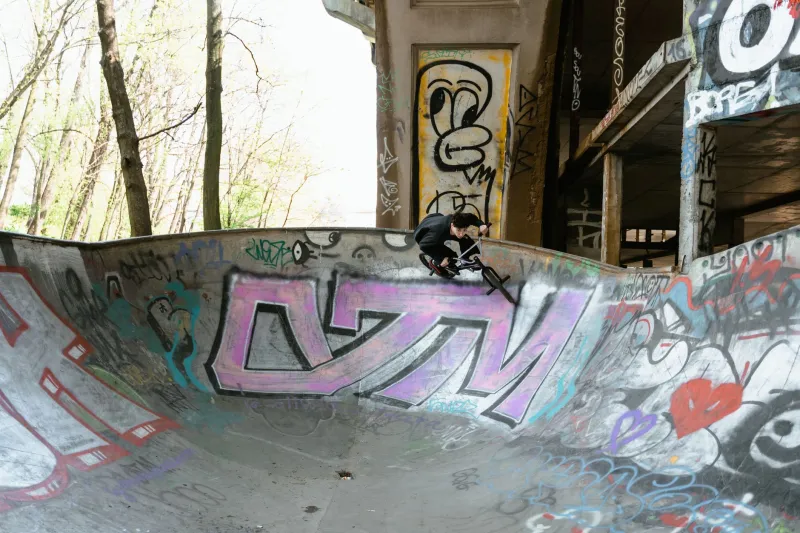
The directions weren't exactly Google Maps-friendly. A DM from a Tokyo rider, a few blurry screenshots of a neighborhood, and a vague description involving a specific train stop and "turn left past the vending machines." That's how Tyler Grosz, a 27-year-old BMX street rider from Columbus, Ohio, found himself standing in a narrow Osaka alleyway staring at one of the most meticulously designed DIY riding setups he'd ever seen.
"It wasn't big. It wasn't fancy. But everything about it made sense," he says. "Every ledge, every transition, every gap — it was like someone had thought about riding physics for years before they touched a piece of concrete."
Tyler isn't alone. A quiet but growing wave of American BMX riders is making the trip to Japan not for the famous spots, but for the ones that barely exist on any map.
Why Japan? Why Now?
The short answer is social media, but the longer answer is more interesting.
Japanese BMX culture has been developing its own distinct identity for decades, largely insulated from the trends and commercial pressures that shape the American scene. Without the same level of corporate sponsorship infrastructure or the pressure to produce content for massive audiences, Japanese riders have been free to build and ride for the pure sake of the craft.
What's changed recently is visibility. Japanese BMX riders — many of them operating small, hyper-dedicated accounts — have started appearing in the feeds of American riders through algorithmic recommendation, shared clips from international competitions, and cross-cultural tagging. What American riders see when they look at this content isn't just impressive riding. It's impressive places.
The spots in these videos look different. Tighter. More intentional. Worn in ways that suggest years of use by people who genuinely loved them.
"I kept seeing this one spot in clips from different riders and I couldn't figure out where it was," says Kayla Simmons, a 23-year-old flatland and street rider from Portland. "It took me three months of DMs before someone actually told me it was in a district of Nagoya. I booked a flight two weeks later."
What Makes Japanese DIY Spots Different
American DIY skate and BMX spots tend toward scale. Big transitions, long rails, wide open concrete expanses. They're built with ambition, often in reclaimed industrial spaces, and they reflect an aesthetic that values spectacle.
Japanese DIY spots operate on a different logic entirely.
Space constraints in Japanese urban environments mean that builders have had to become extraordinarily creative with small footprints. A spot that would barely register as a warm-up zone in an American context might be the centerpiece of a Japanese setup — but it's been refined to a degree that makes it endlessly rideable. Every angle is considered. Surfaces are maintained with a level of care that would seem excessive in most American DIY contexts.
There's also a strong culture of spot stewardship that doesn't have a direct American equivalent. Japanese riders who build and maintain spots often treat them like shared property in the deepest sense — not just "don't mess it up" but actively maintaining, improving, and protecting the space over years. This creates spots that age well rather than deteriorating into rough concrete with rusted metal.
"The ledges were waxed perfectly. Like, professionally," says Tyler. "And this was a spot under a bridge that officially doesn't exist. Someone cares about that place."
The Spots Themselves
Without putting specific addresses into print — and potentially blowing up scenes that thrive precisely because of their low profile — it's worth describing the kinds of places American riders are finding.
In the outskirts of Tokyo, there are covered parking structure setups where the geometry of the architecture has been augmented with hand-poured additions: small kickers, custom curbs, barriers repurposed as obstacles. These aren't big builds. They're surgical ones.
In Osaka, alleyway culture has produced spots that exist almost in negative space — the riding happens in the gaps between buildings, using existing architecture in ways that require you to completely rethink your line selection before you even drop in.
The Nagoya spot that sent Kayla on her three-month search turned out to be a converted utility area behind a commercial building — technically private property, but tolerated by the owners who'd apparently watched it develop over years. "It was maybe 40 feet long," she says. "But I rode it for six hours. There was something new to find every single session."
Word of Mouth in the Algorithm Age
What's fascinating about how American riders are finding these spots is that it's simultaneously old-school and completely modern.
The discovery process still runs on trust and personal connection. You don't find these places by Googling them. You find them by building relationships with Japanese riders over time — through comments, DMs, and eventually the kind of mutual credibility that comes from showing you're serious about riding and not just tourism.
But the initial connection almost always starts algorithmically. A clip surfaces. You follow the account. You engage genuinely. Eventually, if you're persistent and respectful, the conversation moves from public comments to private messages to actual addresses.
"Japanese riders are welcoming, but they're not going to hand you something precious right away," explains Kayla. "You have to show that you get it. That you're not going to show up, film a bunch of stuff, post the location, and blow the spot up."
This unwritten protocol is something American riders are learning — sometimes through awkward trial and error — as Japanese BMX tourism becomes more common.
What Riders Bring Back
Beyond the sessions themselves, American riders returning from Japanese spot pilgrimages talk about something harder to quantify: a shift in how they think about riding environments.
The Japanese approach to spot design — patient, precise, built for longevity over spectacle — is starting to influence how some American riders approach their own DIY projects. Less "how big can we make this" and more "how right can we make this."
Tyler has been applying that logic to a small DIY project he's been working on back in Columbus. "I keep asking myself what a Japanese builder would do here. Usually the answer is: less, but better."
For a BMX culture that's spent decades chasing bigger, louder, and more, that might be the most radical import of all.