Steel and Soul: Why American BMX Riders Are Ditching Domestic Brands for Japanese-Built Machines
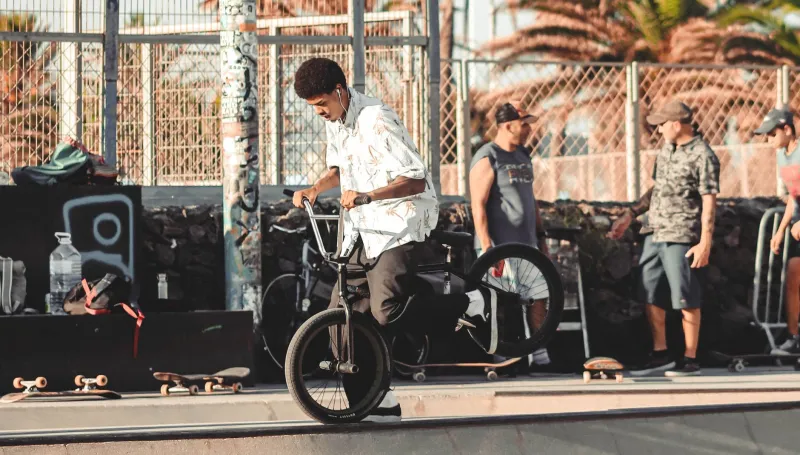
Ask a serious BMX rider what their setup is and you'll get a long answer. Every component matters — the geometry of the frame, the weight distribution of the cranks, the way the bars flex under pressure in a hard landing. It's not obsession. It's engineering literacy. And right now, a growing number of American riders are directing that literacy toward Japan.
Japanese BMX manufacturing has been building a reputation for years among the kind of riders who pay attention. But something has shifted recently in how that reputation is translating to actual purchasing decisions in the US market. Riders who would have defaulted to established American brands without a second thought are now building Japanese setups — and once they do, most of them don't go back.
The Craftsmanship Gap Nobody Talks About
Here's the thing about Japanese manufacturing that doesn't come up enough in BMX conversations: it's not just about quality control in the abstract sense. It's about the philosophy behind the production. Japanese fabrication culture — whether you're talking about motorcycles, bicycles, or BMX components — carries a deep commitment to the idea that the process matters as much as the product.
That shows up in measurable ways. Weld consistency. Tubing tolerances. The heat treatment processes used on chromoly frames. The precision with which dropout alignment is maintained through production. These aren't marketing points — they're technical realities that riders and mechanics can feel and verify.
"I've cut apart frames from half a dozen manufacturers to look at the internal welds and the tube preparation," says Kyle Ostrander, a mechanic and frame builder based in Columbus, Ohio, who has worked with professional riders for over a decade. "The consistency in Japanese-made frames is genuinely different. It's not night and day on every piece, but when you're looking at how a frame is going to perform under repeated high-impact stress, those tolerances matter."
Kyle started recommending Japanese-built options to the riders he works with about three years ago. The feedback has been consistent: longer component life, more predictable flex patterns, and a kind of confidence in the material that changes how riders approach their riding.
What the Numbers Actually Mean
Let's get specific, because this conversation deserves specificity.
Japanese BMX frame manufacturers working in the premium segment are typically using high-grade chromoly — 4130 in most cases, with some producers moving into proprietary alloy blends — with wall thicknesses and butting profiles that are dialed to specific performance targets rather than cost targets. The difference sounds small on paper. In practice, a frame built to a performance specification rather than a price point rides differently in ways that compound over time.
Geometry is another area where Japanese manufacturers have been willing to innovate while some American brands have played it safe. Subtle differences in head tube angle, chainstay length, and bottom bracket height can dramatically change how a bike responds in a park environment — how quickly it changes direction, how stable it feels in technical manual sections, how it absorbs the impact of a dropped stair set.
"I switched to a Japanese frame last year and the first thing I noticed was how planted it felt in manuals," says pro rider Devon Ashcraft, who competes on the US park circuit. "It wasn't softer or stiffer — it was just more predictable. I knew exactly what the bike was going to do. That's huge when you're trying to dial in technical lines."
Devon's experience isn't unusual. Manual precision — the ability to hold a balance point through extended, technically demanding lines — is one of the areas where riders most consistently report improvement when switching to Japanese-engineered setups.
The Component Story
Frames are the headline, but the component conversation is equally important. Japanese BMX parts manufacturers have been producing high-quality cranks, hubs, stems, and bars for years, often as OEM suppliers to brands that then put their own names on the product. As that supply chain has become more transparent, riders have started going directly to the source.
Japanese hub engineering in particular has attracted serious attention. The bearing tolerances, the flange geometry, the spoke hole drilling — all of it contributes to a wheel build that holds true longer and transfers power more efficiently. For riders who are building their own wheels or working with mechanics who care about this stuff, the difference is tangible.
"I rebuilt a set of wheels around Japanese hubs for a rider I work with and the spoke tension held for six months of hard riding without a single true," says Ostrander. "That doesn't happen. Normally I'm seeing wheels come back in for adjustment every couple months. The precision in the manufacturing just eliminates a lot of the variables."
Culture Shift at the Park
Beyond the technical conversation, something cultural is happening in American BMX parks that mirrors what's going on in skate fashion. Riders are becoming more curious about where their equipment comes from and what values are embedded in its production.
The Japanese approach to manufacturing — the emphasis on craftsmanship, the long view on product development, the resistance to cutting corners for margin — resonates with riders who see their equipment as an extension of their commitment to the sport rather than just a commodity.
"There's a philosophy in Japanese manufacturing that feels aligned with how serious riders think about BMX," says Ashcraft. "It's not about the cheapest way to make something. It's about the right way to make something. That matters to me."
This cultural alignment is showing up in how riders talk about their setups, how they document their riding on social media, and increasingly in the purchasing decisions of younger riders who are entering the sport with a more global frame of reference than previous generations.
Where This Goes From Here
The American BMX market is not about to abandon domestic brands — the history, the cultural weight, and the community infrastructure built around those brands is real and durable. But the conversation has genuinely changed.
Japanese manufacturers and component makers have earned a seat at the table not through marketing spend or team rosters but through product performance. That's the hardest kind of reputation to build and the most resilient kind to maintain.
For American riders willing to do the research, build the relationships with specialty retailers who stock Japanese equipment, and think carefully about what they want from their setup — the options have never been better. The precision engineering coming out of Japan isn't a trend. It's a standard. And American BMX is starting to hold itself to it.