Ghost Concrete: How America's DIY Skate Builders Are Mining Japan's Forgotten Urban Ruins for Inspiration
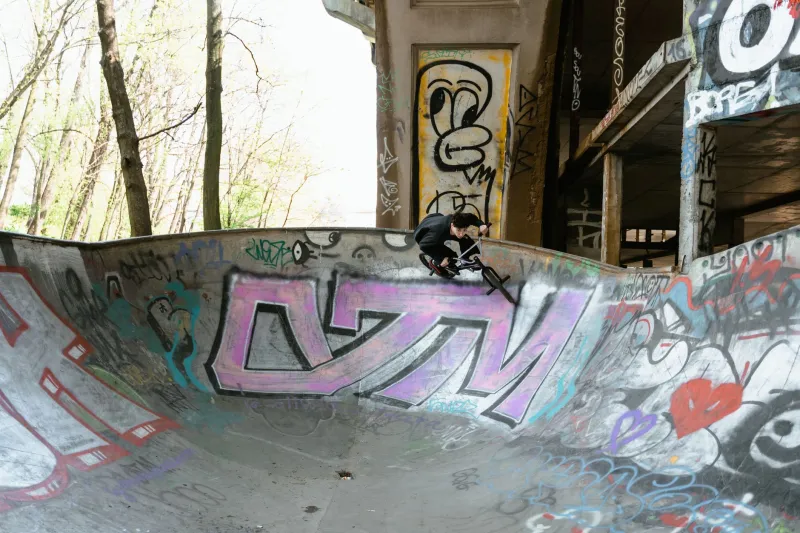
Somewhere in the post-industrial flatlands outside Detroit, a crew called Midwest Slab has built something that doesn't look like it belongs there. The transitions are off-angle in a way that feels intentional but unsettling. The ledges are poured at a height that doesn't match any standard skatepark spec. There's a quarter-pipe that curves into a wall feature at a geometry most American skatepark designers would reject on paper. It works, though. It works in a way that's hard to explain until you know where the inspiration came from.
The crew's de facto architect, a 28-year-old named Marcus Webb, keeps a folder on his laptop with over four thousand photos. Almost none of them are from the US. Most are from Japan.
The Archive
The documentation habit started, Webb explains, when he stumbled onto a YouTube rabbit hole of Japanese urban exploration footage — the genre known in Japan as haikyo, which roughly translates to ruins or abandoned place. "I wasn't even looking for skate spots. I was watching this video of some guy walking through an old textile factory in Aichi Prefecture and I just kept thinking — that ledge. That wall angle. That drainage channel. Every ten seconds there was something I wanted to build."
He's not alone. Across online communities where DIY skate builders congregate — Discord servers, niche subreddits, group chats that operate more like architecture firms than skate crews — the cross-referencing of Japanese urban decay has become a genuine design practice. Builders share geotagged photos of Osaka port infrastructure. They pass around aerial imagery of Hokkaido's shuttered coal facilities. They study the way Japanese industrial architects from the mid-20th century handled drainage, load-bearing angles, and surface transitions — not because those engineers were thinking about skateboarding, but because the physics they were solving for produce shapes that skate beautifully.
"Japanese industrial construction from roughly the 1950s through the 1980s has this particular aesthetic," says Priya Nakamura, an architecture student in Portland who moonlights as a DIY spot consultant for local crews. "Exposed aggregate concrete, angular drainage lips, these long flat sections that terminate in abrupt grade changes. It's functional brutalism, basically. And it's incredible to ride."
What Japan's Ruins Have That American Spots Don't
The honest answer is: imperfection, and lots of it.
American skateparks — even DIY ones — tend toward a certain smoothness of intent. The ideal is clean, rideable, consistent. When American builders improvise, they're usually improvising around constraints: limited budget, limited materials, limited space. The imperfection is accidental.
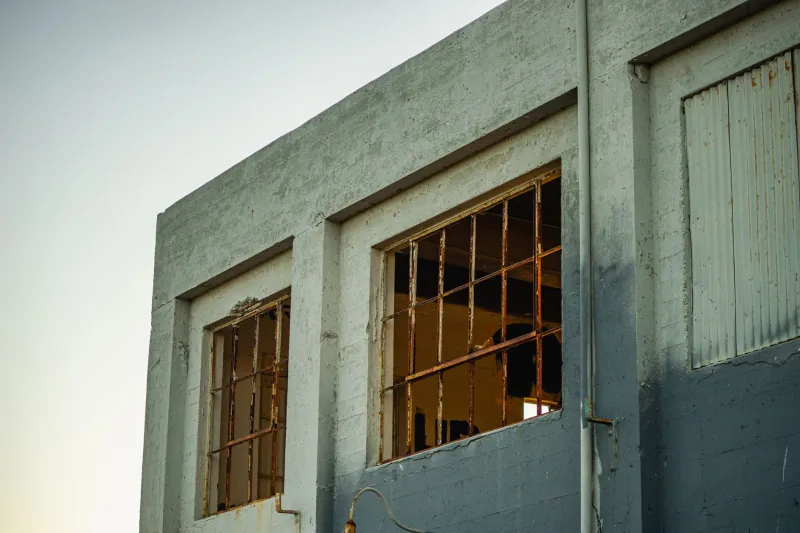
Japan's abandoned urban landscape offers a different kind of imperfection. It's the result of decades of use, modification, environmental stress, and the specific way Japanese urban infrastructure was layered over itself as cities grew. A loading dock from 1962 might have a ramp addition from 1978 that was itself partially demolished in 1995, leaving a transition shape that no designer would ever deliberately draw but that happens to work perfectly for a particular style of approach.
"There's a term in Japanese aesthetics — wabi-sabi — that's about finding beauty in impermanence and imperfection," Nakamura says. "I don't want to over-romanticize it, but there's something real in the idea that these spaces have been shaped by time in ways that feel organic. When you try to replicate that in a DIY spot, you're essentially trying to compress decades of entropy into a single build."
Midwest Slab's Detroit spot does exactly that. Webb and his crew spent three months studying reference photos before pouring a single bag of concrete. They deliberately introduced grade variations that most builders would smooth out. They built a manual pad with a slight crown — barely perceptible to the eye, immediately noticeable under your wheels.
The Case Studies
Midwest Slab isn't the only crew working this way. In Atlanta, a group called Red Clay Collective has been building a sprawling spot in a former rail yard that draws direct reference from the elevated freight infrastructure of Kawasaki's industrial waterfront. Their signature feature is a series of staggered platform levels connected by poured transitions — a direct translation of the tiered loading architecture they found in a 2019 photo essay about a shuttered Kawasaki shipping facility.
"We didn't copy it exactly — we couldn't, the materials and space are totally different," says collective member and primary builder Damien Ross. "But we used it as a blueprint for thinking about vertical relationships between features. How does one level talk to the next? Japanese industrial architecture is obsessed with that question in a way American construction just isn't."
In Los Angeles, a smaller crew operating out of Boyle Heights has taken a more literal approach. They've been 3D-modeling specific features from Japanese urban spots — using photogrammetry software to build digital reconstructions from reference photos — and then scaling and adapting those models for their available space. The result is a compact spot with a curb cut feature that is, geometrically speaking, a direct descendant of a drainage structure outside an abandoned sake brewery in Fushimi.
The Limits of the Lens
Not everyone in the DIY building community is fully on board with this direction. Some builders argue that the Japanese-reference approach risks producing spots that are aesthetically interesting but functionally inconsistent — that the "beautiful imperfection" philosophy can be a justification for sloppy pours and unrideable surfaces.
"There's a difference between intentional complexity and just not finishing your concrete properly," says one builder who asked to remain unnamed. "I've seen spots that claim to be inspired by Japanese aesthetics that are really just badly built. The philosophy shouldn't be an excuse."
It's a fair critique, and the best builders in the Japanese-reference community would agree with it. The goal isn't to recreate ruin — it's to understand why certain spatial relationships produce certain riding experiences, and then engineer those relationships deliberately.
Webb puts it simply: "Japan figured out, accidentally, through decades of building things for non-skate reasons, that certain shapes and angles and surface relationships create incredible spots. We're just trying to reverse-engineer that accident. You still have to pour good concrete. You still have to build something that holds up. The inspiration is the starting point, not the finishing line."
The finishing line, in this case, is a spot that makes someone ride differently than they did before they showed up. By that measure, Midwest Slab's Detroit build is doing exactly what it set out to do. Marcus Webb's laptop folder now sits at four thousand two hundred and seventeen photos.
He's still adding.