Before the First Push: The Japanese Pre-Session Ritual That's Making American Skaters Rethink Their Warm-Up Game
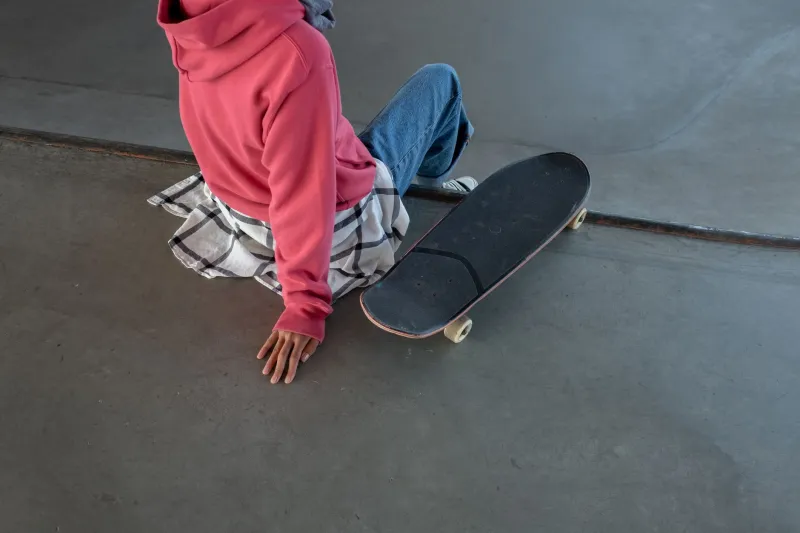
Walk up to any public skate spot in Tokyo — Yoyogi Park on a Tuesday morning, the smooth concrete under Shinjuku's overpasses, the tucked-away plazas in Shibuya that locals guard like secrets — and you'll notice something strange. The skaters are there, boards in hand, but nobody's skating yet.
They're breathing. Stretching in specific sequences. Running fingers along their trucks. Staring at the ground like it owes them something.
To an American skater used to rolling up, dropping a board, and immediately attempting the trick they were thinking about on the drive over, this looks like stalling. It's not. What you're actually watching is one of the most underrated performance advantages in freestyle and street skating — and it's been hiding in plain sight on the other side of the Pacific for decades.
The Warm-Up Problem Nobody's Talking About
American skate culture has always leaned hard into spontaneity. Drop in, figure it out, film the bails, post the make. There's a romance to that approach, and nobody's arguing it doesn't produce incredible skaters. But there's also a ceiling — a frustrating plateau that a lot of US riders hit and can't explain.
Coach Hiroshi Tanaka, who runs a freestyle and street development program out of Osaka and has worked with several American riders over the past few years, puts it plainly: "Most American skaters I see arrive at a session already mentally scattered. They haven't transitioned from their regular day into skate mode. The body is there, but the nervous system is still somewhere else."
That phrase — the nervous system is still somewhere else — sounds almost poetic, but there's hard science underneath it. Performing precise motor skills like skateboarding requires what sports neurologists call a state of focused arousal: calm enough to process feedback from the board, alert enough to make split-second adjustments. Jumping from highway driving or phone-scrolling directly into trick attempts means your brain is still running background processes that compete with the precise sensorimotor loop skating demands.
Japanese skaters, particularly those trained in the freestyle tradition that blends martial arts discipline with street culture, have developed pre-session routines that deliberately bridge that gap.
What the Ritual Actually Looks Like
It's not one universal protocol — it varies by skater and region — but the core elements show up consistently.
Breath sequencing comes first. Not the casual deep breath before a big drop, but two to four minutes of deliberate diaphragmatic breathing. Slow inhale through the nose, controlled exhale, with attention focused specifically on physical sensations rather than thoughts. Riders who've trained under Japanese coaches describe it as "turning down the volume" on mental noise before the session starts.
Equipment inspection follows, and this part often surprises American skaters who adopt it. It's not just a safety check — it's tactile and intentional. Running hands along the deck, spinning wheels by hand one at a time, pressing down on the trucks to feel the tension. The goal isn't to find problems (though sometimes you do). It's to establish a physical connection with the board before you're moving on it. Several riders describe this as "re-introducing yourself to your setup" after days off.
Stance rehearsal without movement is where it gets really interesting. Japanese skaters will stand on their boards — stationary — and run through the weight distribution of tricks they're planning to work on. Shifting pressure to the tail, feeling the nose lift, mimicking the shoulder rotation of a kickflip without ever leaving the ground. It looks like nothing. It's actually motor pattern priming.
"You're pre-loading the movement into your muscle memory before you ask your body to execute it at speed," explains Kenji Mori, a Kyoto-based skater who spent a year training with American crews in Los Angeles before returning to Japan. "In the States, I noticed guys would try a trick ten times just to figure out what the trick felt like. We try to already know what it feels like before we commit to the attempt."
American Riders Who Made the Switch
Dallas-based street skater Marcus Webb stumbled onto Japanese pre-session methods through a YouTube rabbit hole featuring footage of Osaka's underground freestyle scene. He started incorporating breath work and equipment ritual into his sessions about eight months ago and says the change was noticeable within two weeks.
"I used to need like forty-five minutes of garbage attempts before I found my feet in a session," Webb says. "Now I'm dialed in within ten or fifteen minutes of actual skating. The first tricks I land in a session used to be flukes. Now they're consistent."
Webb isn't alone. A growing number of US skaters — particularly those plugged into the online communities that bridge Japanese and American street culture — are quietly adopting variations of these routines and reporting similar results: faster warm-up windows, better consistency in trick execution, and fewer session-ending mental walls.
The Neuroscience That Backs It Up
Sports science has a name for what these rituals are engineering: pre-performance routines, or PPRs. Research across multiple precision sports — golf, gymnastics, archery — consistently shows that athletes who use structured PPRs perform more consistently than those who don't, particularly under pressure or in unfamiliar environments.
The mechanism is partly attentional (narrowing focus onto task-relevant cues) and partly physiological (regulating cortisol and adrenaline to the optimal performance window). Skateboarding hasn't been studied as extensively as Olympic sports in this context, but the physical demands — balance, proprioception, rapid decision-making — map closely onto sports where PPR research is robust.
What Japanese skate culture figured out through tradition and practice, sports science is now confirming through data.
Bringing It to the Skatepark
If you want to try this without flying to Osaka, the entry point is simpler than you'd think. Start with five minutes. Two minutes of focused breathing before you even put your board down. Two minutes of deliberate equipment feel — not rushing through it. One minute of standing on your board and mentally rehearsing the first trick you want to land that day.
It'll feel weird. Your crew might clown you. Do it anyway.
The concrete doesn't care how casual your approach looked. It only responds to how prepared your nervous system actually was when you stepped on the board.
Japanese skaters learned that a long time ago. The rest of us are just catching up.