Stop, Breathe, Drop In: The Japanese Mental Reset Technique That's Cracking Open Plateau Tricks
You know the feeling. You've been throwing yourself at the same trick for two hours. Your shins are wrecked, your board has a fresh crack in the nose, and you're no closer to landing it than when you started. The American instinct? Push harder. Get back up faster. More reps, more attempts, more everything.
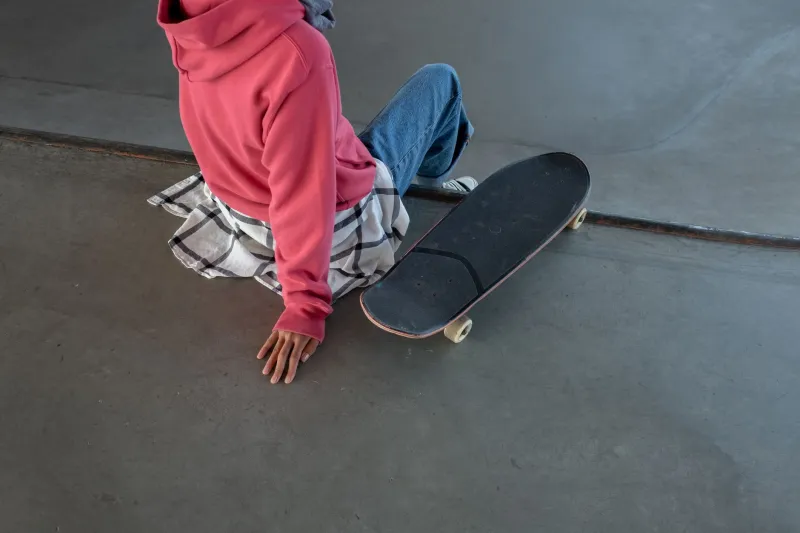
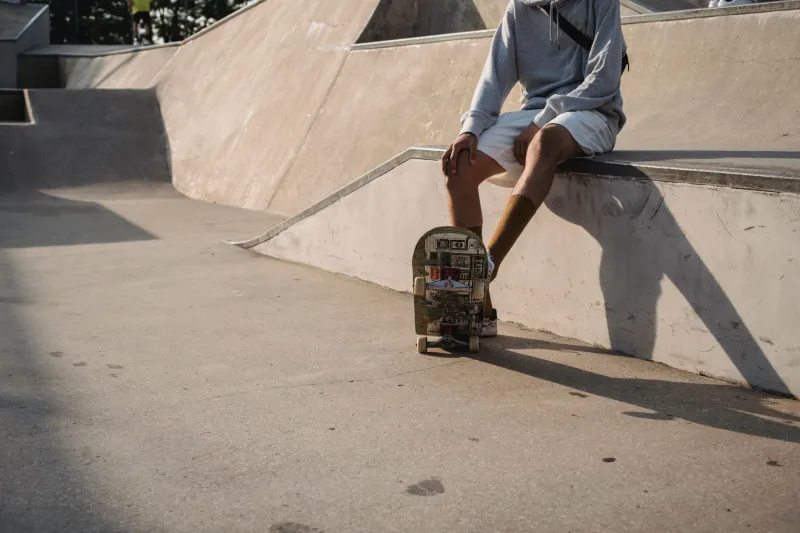
But in skate parks across Tokyo, Osaka, and Kyoto, you'd see something that looks almost foreign to most US riders: a skater walks away from a trick mid-session, sits down, closes their eyes, and just... waits. No phone. No headphones. No conversation. Just stillness.
This isn't giving up. This is the practice.
The Plateau Problem Nobody Talks About Honestly
Every skater hits a wall. You get a trick dialed to a certain point — maybe you're stomping it on flat ground but can't transfer it to a ledge, or you're rotating the first 180 degrees of a 360 flip but the board keeps shooting out. Progress stops, frustration climbs, and the session turns into something that feels more like punishment than skating.
Coach Haruki Senda, who runs a youth skate development program in Saitama and has worked with several riders who went on to compete internationally, describes this moment as a signal worth listening to. "When the body stops learning, it is telling you something the mind is not hearing," he explains. "Most athletes try to shout louder. We teach them to get quieter."
Senda's approach draws from a broader Japanese philosophy around skill acquisition — one that treats focused rest not as laziness but as an active part of the learning process. The idea has roots in traditional Japanese arts, where deliberate pauses between practice cycles are built into the structure of training itself. Skaters in his program are taught to recognize when they've crossed from productive repetition into what Senda calls "mechanical looping" — going through the motions without any real cognitive engagement.
"That is when the attempts stop teaching you anything," he says. "You are just adding noise."
What Mental Spacing Actually Looks Like
The technique isn't complicated, but it does require a real shift in how you think about a session's value.
The basic structure works like this: you make a set number of attempts on a trick — typically somewhere between three and six — then you stop completely. You step away from the spot. You find somewhere to sit or stand quietly, away from the action, and you spend anywhere from two to five minutes in deliberate reflection. Not scrolling. Not talking. Not watching other skaters. You replay the attempts in your head, paying specific attention to the moment things went wrong or felt off.
Then you go back.
Ryo Nakamura, a street skater based in Nagoya who's been incorporating this method for about three years, describes the shift it created in his training. "Before, I would try a trick fifty times and land it once by accident. I didn't actually know what I did differently," he says. "Now I try it six times, I think about it carefully, and when I go back I have a specific thing I'm adjusting. The progress is slower at first but then it gets much faster."
That paradox — slower to get faster — is exactly what makes this hard to sell to American skaters raised on video montages of relentless grinding.
Why American Culture Makes This Feel Wrong
There's a deep cultural script in US skateboarding that equates effort with volume. The most respected sessions are the ones where someone threw themselves at something a hundred times. The war stories are about persistence through pain, not strategic stillness. Skate videos celebrate the brutal process — slams, frustration, exhaustion — before the final land.
That narrative isn't wrong, exactly. Persistence matters. But it can obscure something important: the difference between repetition that builds skill and repetition that just burns time and body.
Senda points out that the mental fatigue of repeated failed attempts actually degrades the quality of each subsequent try. "After many attempts with no success, the skater is not practicing the trick anymore. They are practicing frustration. The movement becomes tense, rushed, defensive. This is not useful learning."
A few US coaches have started picking up on similar ideas through sports psychology research — concepts like "blocked practice" versus "interleaved practice" have been getting traction in training circles — but the specific application to skateboarding's between-attempt culture is still pretty rare stateside.
Practical Ways to Bring This Into Your Sessions
You don't need to overhaul your entire approach to try this. Start small.
Set a cap on consecutive attempts. Pick a number — five is a good starting point — and commit to stepping away after that many tries, regardless of how close you feel. This is the hardest part for most skaters. Do it anyway.
Use the pause with intention. Those two to four minutes off the trick aren't a break in the passive sense. Close your eyes if you can and mentally replay your last attempt in detail. Where did your weight shift? When did you feel yourself bailing? What was your foot position at the moment of the flip or pop? You're not beating yourself up — you're gathering information.
Write it down. Some Japanese coaches have their riders keep a small session notebook. A few words per attempt cluster is enough: "front foot too far," "late with the catch," "rushed the pop." Over time, patterns emerge that are invisible when you're in the middle of grinding through reps.
Watch before you go back. If you're filming your attempts — and you should be — review the clip during your pause. But watch it once, focused, not ten times in a spiral of self-criticism.
Let the gap be uncomfortable. The urge to jump back on your board before the pause is done is real and strong. Sitting with that discomfort is part of the practice. It trains your patience alongside your technique.
The Trick Isn't the Only Thing That Changes
Riders who've adopted mental spacing consistently report something beyond just landing the stuck trick faster. The overall texture of their sessions shifts. They feel less wrecked at the end of a day, mentally and physically. They carry less of the emotional weight that comes from grinding fruitlessly. And they start to build a clearer internal model of their own skating — what works, what doesn't, and why.
Nakamura puts it plainly: "I used to hate certain tricks because they made me feel stupid. Now I am just curious about them. The pause changed how I think about failing."
That reframe — from failure as something to bulldoze through to failure as information worth sitting with — might be the most transferable thing here. American skate culture has always had heart. The Japanese approach is offering something to pair with it: a little more patience, a little more quiet, and a whole lot more intention between the attempts.
Next time you're stuck on something, try walking away on purpose. See what the silence tells you.