Feel Before You Fall: The Body-First Trick Progression System Japanese Skaters Swear By
There's a moment every skater knows. You've thrown the same trick fifty times. Your shins are wrecked. Your brain is fried. And somehow, you're no closer to landing it than you were two hours ago. Most American riders call that "the grind" — a badge of honor, a rite of passage. Push through it. Stack more reps. Eventually your body figures it out.
In Japan, a lot of serious skaters think that approach is, to put it politely, leaving a ton of progression on the table.
The concept at the center of this conversation is something that translates roughly to karada de oboeru — learning through the body. It's not new in Japanese athletic culture. Martial arts, gymnastics, and traditional dance have leaned on it for centuries. But the way it's showing up in modern street skating? That's where things get genuinely interesting.
What "Pressure Points" Actually Means in This Context
When Japanese skaters and coaches talk about pressure points, they're not talking about acupuncture. They're talking about proprioception — your body's internal GPS. Specifically, they're referring to the precise areas of your feet, ankles, knees, and hips that communicate what's actually happening between you and your board at any given moment during a trick.
The idea is simple but demanding: before you can fix what's going wrong, you have to feel what's going wrong. Not guess. Not assume. Actually isolate the sensation.
Take a heelflip. An American skater who keeps under-flipping might get told to "kick harder" or "commit more." A Japanese coach operating through this lens is more likely to ask: where is your heel pressure at the moment of pop? Is your weight centered over the ball of your foot or drifting toward your arch? What does the board feel like under your back foot in the half-second before you jump?
Those questions sound almost philosophical until you realize they're targeting something real and measurable — the exact mechanical breakdown causing the miss.
Slowing Down to Speed Up
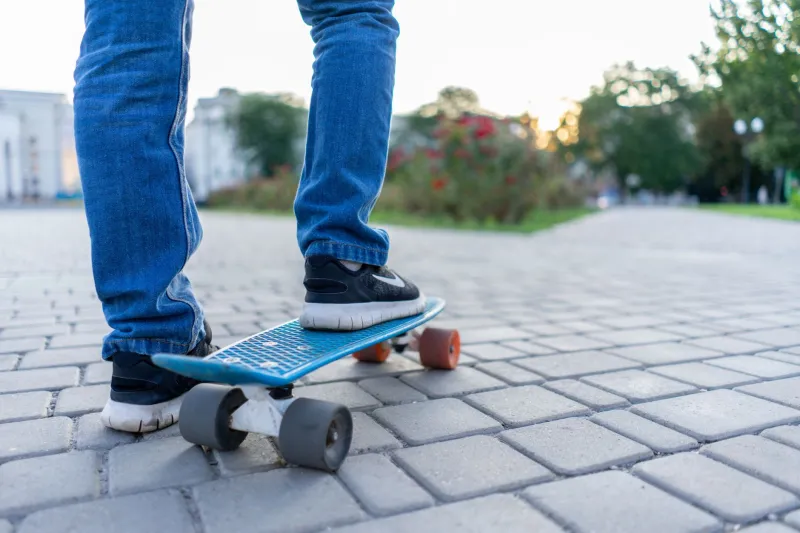
One of the more counterintuitive aspects of this approach is how deliberately slow the early stages are. Riders in Japan who train this way often spend significant time on what amounts to static stance work — standing on the board without moving, eyes closed in some cases, just mapping the sensations underfoot.
Dallas-based skater Marcus Trevino picked up on this method after a trip to Osaka two years ago. He was stuck on backside 180 nosegrinds for months, consistently bailing out of the grind early.
"I thought I had a commitment problem," he says. "Turns out I had a weight distribution problem I'd never noticed because I was always moving too fast to feel it. A rider I met out there had me stand in my backside grind position — just static, no movement — and really feel where my pressure was. My weight was way too far forward. I'd been compensating for it with speed and never knew."
Within a week of focused slow-motion practice, Trevino was locking the grind consistently. He hadn't added reps. He'd added awareness.
The American Default: Volume Over Precision
This isn't a knock on American skate culture. The rep-heavy approach has produced some of the most technically gifted riders on the planet. But there's a pattern worth examining.
American skate training — especially at the street level — tends to be intuitive and high-volume. You learn by doing, falling, and doing again. Coaches and older riders give cues that are mostly visual: "your shoulders are off," "you're not looking at the spot." The feedback loop runs from eyes to brain to body.
The Japanese body-awareness method flips that loop. It runs from body to brain first. The eyes and the visual cues come later, once the internal feedback system has been calibrated.
Neither approach is wrong. But when riders hit a plateau — that infuriating wall where reps stop producing results — the body-first system gives them a completely different toolkit to work with.
Proprioception Drills That Are Crossing the Pacific
A handful of these drills are starting to circulate through American skate communities, partly through social media, partly through riders who've trained in Japan and brought the concepts home.
One of the most commonly referenced is the pressure mapping drill: before attempting a trick, stand in your setup position and consciously identify three points of contact — heel, ball of foot, and toes — on each foot. Note which ones feel active and which feel passive. Then attempt the trick and immediately after (landed or not), try to recall how those pressure points shifted.
Another is single-motion isolation: strip a trick down to one movement — just the pop, just the catch, just the weight shift into a grind — and perform that motion repeatedly at low intensity with full attention on what the body is doing internally.
These aren't warm-up drills. They're diagnostic tools. The point is to generate data that you can actually act on.
When the Body Talks, Listen
Riders who've integrated this approach consistently describe the same shift: they stop feeling like they're fighting their tricks and start feeling like they're solving them.
Jordan Kessler, a BMX-turned-skate crossover rider from Phoenix, put it this way: "I was always told skating is about feel. But nobody ever told me how to actually develop that feel intentionally. I thought it just happened. The Japanese approach treats it like a skill you build, not a thing you wait for."
That reframe — feel as a trainable skill — is probably the most portable idea in this entire methodology. You don't need a Japanese coach or a specific skate spot or any special equipment. You need attention and a willingness to slow down long enough to hear what your body is already trying to tell you.
Bringing It Back to the Pavement
American street skating is built on aggression, creativity, and a healthy disrespect for limitations. That DNA isn't going anywhere, and it shouldn't. But there's room in that identity for something that Japanese skate culture has been quietly cultivating for decades: the idea that understanding yourself physically is just as important as understanding your terrain.
The pressure point method isn't asking you to skate like a Japanese rider. It's asking you to skate like a more aware version of yourself.
And on a long enough timeline, that's the thing that actually breaks plateaus.