The Skater Who Knows Every Crack: Japan's Approach to Memorizing Terrain Like a Second Language
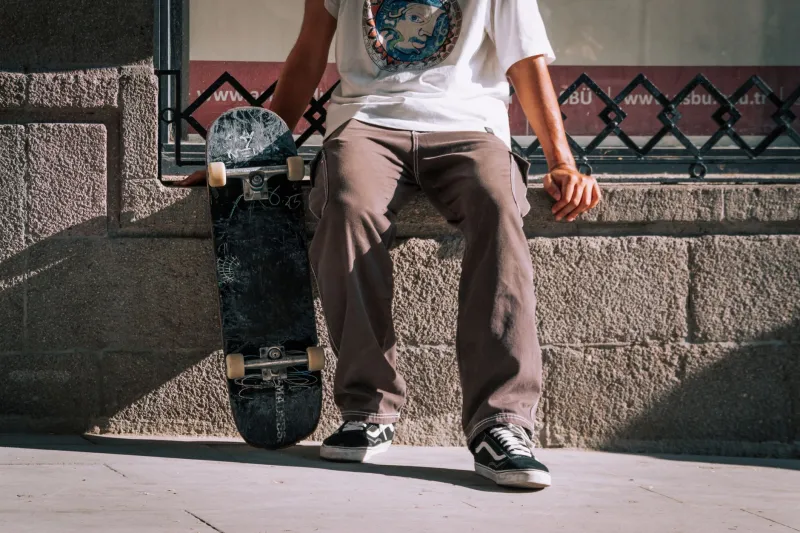
There's a stretch of sidewalk in Shinjuku — not a famous spot, not on any map, not tagged in anyone's stories — where a group of skaters has been showing up for the better part of three years. Same block. Same rough patch near the second expansion joint. Same slightly raised lip where the concrete meets the building's foundation.
To a passing tourist, it looks like a forgettable strip of urban ground. To the skaters who know it, it's a library.
Every crack has a name in their heads. Every texture shift is catalogued. They know where the ground grabs and where it releases, which sections run slightly downhill and which ones push back. They know what happens in the rain, what happens in the early morning cold before the concrete warms up, what happens when the street sweeper leaves a thin film of grit across the smoothest section.
This is terrain memory — and it might be the most underrated skill in street skating.
The Spot-Hopping Trap
American street skating culture has a built-in pull toward novelty. New spots get hyped, clips get posted, and within a week the next new spot is already trending. There's real value in that energy — it pushes riders to adapt, to read unfamiliar terrain quickly, to stay flexible. But it also creates a pattern where depth gets traded for breadth, and a certain kind of technical progression never gets the chance to develop.
When you're always skating somewhere new, you're always also managing the cognitive load of figuring out the terrain itself. A portion of your attention is permanently allocated to uncertainty — is this ledge going to chip? Does this approach have a hidden slope? How much speed do I actually need here? That's not dead weight, exactly, but it is overhead. And it means you're never fully free to just skate.
The Japanese riders who commit to a single spot for months aren't being boring or unambitious. They're eliminating that overhead entirely. When you know a piece of concrete well enough that your body has pre-loaded all the relevant information, something opens up. You can actually think about the trick.
How the Mental Map Gets Built
Talk to riders who practice this kind of deep terrain familiarity and they describe a process that sounds almost meditative. The first sessions at a spot are almost entirely observational — rolling through slowly, feeling for inconsistencies, testing how the surface responds to weight shifts and pressure. Some riders will walk a spot on foot before skating it at all, dragging a foot across the ground to feel texture variations that wheels might skip over.
Over time, the mental map gets layered. The first layer is physical — where the obstacles are, where the transitions happen, where the danger zones live. The second layer is contextual — how the spot changes with weather, time of day, foot traffic, temperature. The third layer is almost intuitive — a felt sense of the terrain that lives in the body rather than the conscious mind, the kind of knowledge that lets a rider adjust mid-trick without thinking about why.
This isn't mystical. It's repetition doing what repetition does. But the key is that the repetition has to be purposeful. You're not just skating the same spot because it's convenient. You're skating it because you're trying to know it completely.
Why This Produces More Technical Riders
Here's what happens when a rider genuinely knows their terrain: they start finding lines that nobody else sees. Not because they're more creative in the abstract, but because they've spent enough time with a specific piece of ground that its possibilities have had time to reveal themselves.
A crack that looks like an obstacle becomes a pop point. A slightly banked wall section that most riders avoid becomes a setup. A rough patch that seems like a hazard turns out to have a specific approach angle where it smooths out just enough. These discoveries don't happen on a first visit. They happen after the twentieth session, the thirtieth, when the spot has stopped being unfamiliar and started being known.
Japanese street skaters who operate this way tend to have a particular quality to their riding — a settled, unhurried confidence that reads as technical mastery even when they're not doing the flashiest tricks. They're not fighting the terrain. They're collaborating with it.
Bringing It Back to American Streets
You don't have to be in Tokyo to use this approach. Every American city has spots that riders know superficially but have never actually learned. The ledge you've skated a dozen times but always with one eye on the door because you're not sure if someone's going to come out and yell at you. The bank spot you hit twice in a session before moving on. The parking garage you've driven past but never stopped at.
Pick one. Go back to it. Not once more — many times more. Walk it before you skate it. Note what changes between visits. Give the cracks names if that helps. Skate it in different conditions. Let it stop being a spot you go to and start being a spot you know.
The progression that comes out of that kind of knowing is different from anything you'll build by chasing the next fresh concrete. It's slower to arrive and a lot harder to shake once it does.